The Global Revolution of Robotaxis and Autonomous Freight

For decades, autonomous vehicles existed in the public consciousness as a distant science-fiction trope—a pop-culture element on par with hovering skateboards or lightsabers. Today, this technology is permanently leaving the realm of dreams. Driverless vehicles on the streets of San Francisco or Shanghai have become a part of the everyday landscape, and the road revolution is beginning to snowball. Before we know it, its scale will easily overwhelm traditional transport and the labor market.
The AI-driven technological breakthrough will make classic "flesh and blood" drivers simply unprofitable for businesses within the next decade. While the costs of maintaining employees and traditional logistics continue to rise, the costs of autonomous systems will plummet drastically. We stand on the precipice of a trillion-dollar market.
Exponential Growth: A Trillion-Dollar Market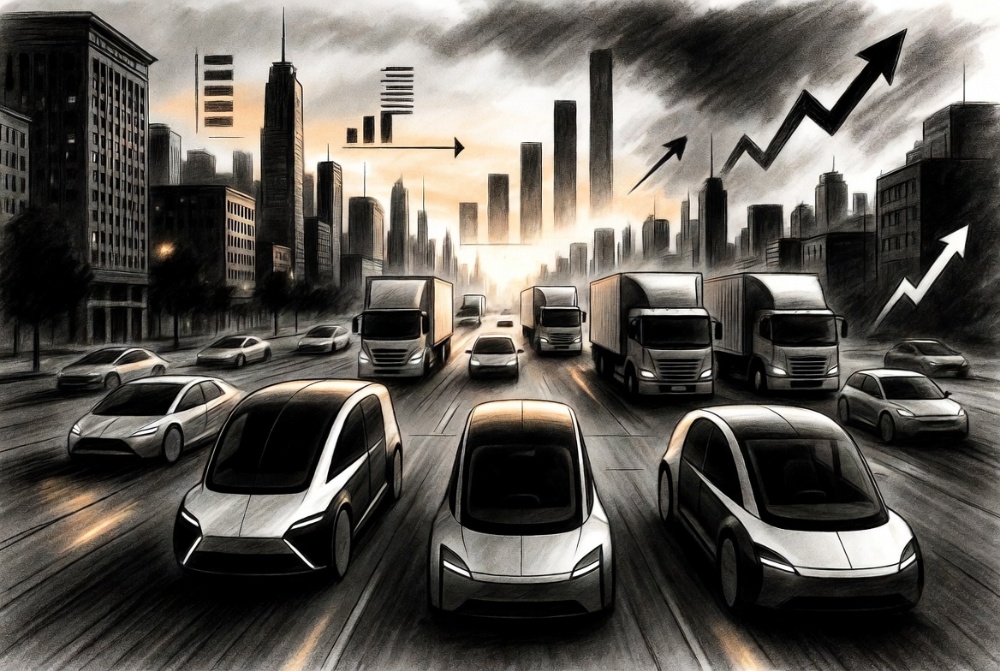
- Artificial Intelligence (AI): In 2022, when ChatGPT debuted, the entire AI industry was valued at approximately $5 billion.
- Obesity Drugs: In 2021, this nascent sector in the US was worth $1.3 billion, only to grow tenfold in just four years.
- Video Streaming: In 2010, the budding Netflix and its competing platforms were worth a combined total of around $5 billion.
Against this backdrop, the global robotaxi market is starting from a relatively low baseline-investment bank Goldman Sachs values it at $1.2 billion. However, forecasts for the coming decade challenge all previous growth leaders.
According to official forecasts from Goldman Sachs, by 2035, the value of the robotaxi market alone will increase a staggering 346-fold, reaching a dizzying $415 billion. It is estimated that approximately 6 million such vehicles will be roaming global roads by then. Interestingly, the balance of power will completely shift. Although the United States is the pioneer today, in 10 years, more than half of the global robotaxi fleet (over 3 million vehicles) will operate in China. Europe, due to strict regulations, will have ten times fewer.
However, the true financial titan will not be passenger transport, but autonomous freight. The autonomous trucking market is projected to reach a value of $560 billion by 2035. According to Goldman Sachs analysts, the tipping point will occur in 2028—that is when the cost of moving freight per mile via a traditional truck (currently around $2.5) will equal the cost of driverless technology. By 2035, autonomous transport will be nearly 40% cheaper than human-driven transport, and freight fleets will gain a critical advantage: the complete absence of working hour limits. In total, the combined turnover of the entire autonomous vehicle market will reach an astronomical $2 trillion by 2035.
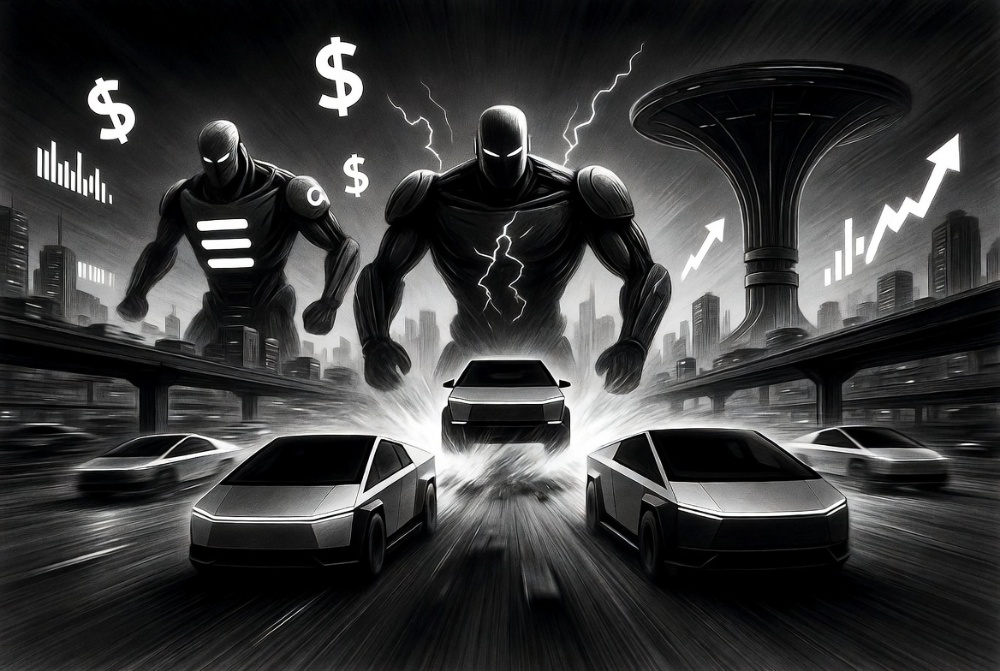
Aggressive Clash of the Giants
1. Waymo (Alphabet/Google) – The Uncontested Leader
The Alphabet-owned company is currently the technological hegemon, managing a fleet of about 2,500 vehicles across six American metropolitan areas. By the end of 2025, the company's revenue reached $180 million (a 109% YoY increase), and forecasts point to hitting $1 billion in turnover. After securing a massive funding round worth $16 billion, Waymo's market valuation jumped to $126 billion. These funds will be used, among other things, for international expansion—the first driverless test zones are set to launch in London and Tokyo.
2. Tesla – Grand Promises and Billions Pumped In
Although Elon Musk generates the most media buzz, Tesla's actual fleet of fully autonomous vehicles on public roads (mostly in Texas) currently stands at only about 30 units. However, Morgan Stanley predicts a rapid scaling of the commercial fleet to 1,000 units. Tesla is prioritizing this segment—the company raised its full-year capital expenditure (CapEx) forecast to $25 billion. Experts estimate that between $8 billion and $12 billion of this pool will be pumped directly into the robotaxi ecosystem. Musk openly admits to investors that significant revenues from this venture will begin to appear starting next year.
3. Uber – The "Consumer Funnel" Strategy
Uber learned painful lessons from history. Following a tragic and high-profile 2018 test accident in Arizona (where an autonomous Volvo struck a woman with a bicycle), the company completely abandoned manufacturing its own cars. Instead, Uber is positioning itself as a global aggregator and distribution platform. The company announced a massive investment plan worth over $10 billion. The strategy involves purchasing thousands of ready-made autonomous vehicles and acquiring equity stakes in promising entities (e.g., $500 million invested in Lucid Motors combined with the purchase of 35,000 cars, $1.4 billion invested in Rivian, as well as strategic alliances with its former rival Waymo and the Amazon-owned company Zoox).
Why the Revolution Will Succeed Now
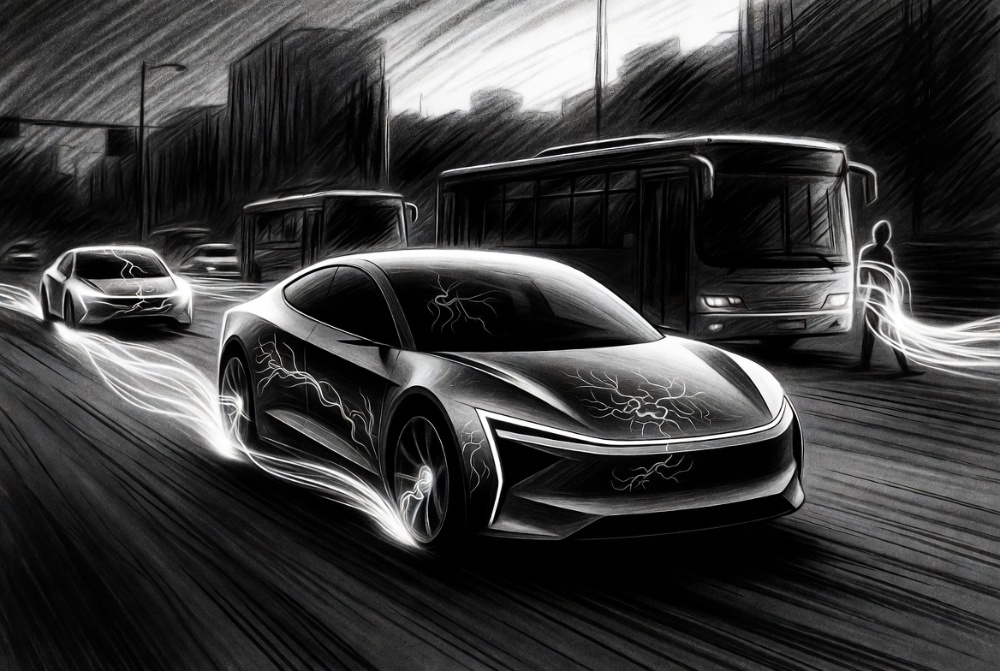
The modern, second generation of vehicles relies on artificial intelligence as its core decision-making backbone. Advanced neural networks can generalize events in real time and build predictions. For instance, based on micro-movements or environmental context, the system can "deduce" that a pedestrian might step out from behind a parked city bus at any moment and proactively bypass the hazard.
The Reality Check: Despite this, systems are not completely flawless. To date, the US highway safety agency has verified over 5,200 incidents involving autonomous cars, recording 54 fatalities. In China, the tragic crash of a Xiaomi SU7 model and a mass failure of the Apollo Go (Baidu) fleet in Wuhan made major headlines; dozens of robotaxis simultaneously shut down in the middle of busy thoroughfares due to a system error, trapping passengers and forcing police intervention. The aftermath of this failure prompted Chinese officials to temporarily freeze the issuance of new fleet licenses.
However, US market statistics show the other side of the coin: autonomous vehicles are involved in just 2% of overall traffic accidents, and only 7.5% of these events result in passenger injuries (for traditional cars, this rate is as high as 28%). In short: statistically, AI algorithms already drive safer than distracted, fatigued humans.
Where is Poland in All This?
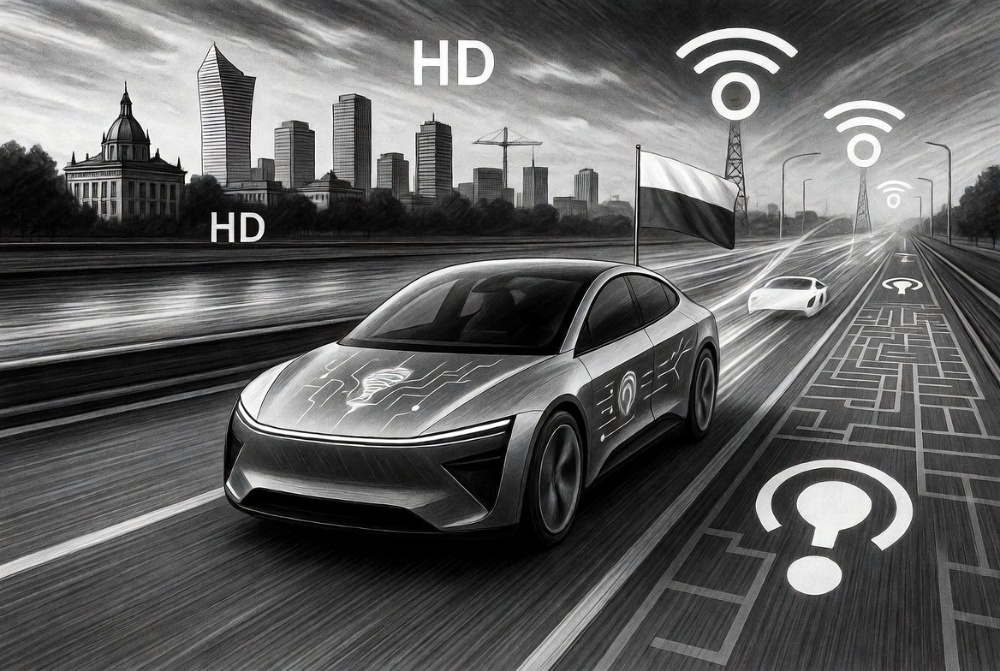
Poland is catching up at a rapid pace. A key milestone is the amendment to the Road Traffic Law signed late last year, which takes effect on June 24, 2026.
The new regulations introduce the legal possibility of conducting advanced testing of autonomous vehicles on public roads. However, it is worth dampening the enthusiasm—this does not mean that commercial, empty Uber or Tesla robotaxis will start cruising Warsaw or Kraków this year. The new law represents a research phase. For a vehicle entirely devoid of a supervising driver to hit Polish streets, a further amendment to the act will be required, as current legal concepts do not define fully driverless structures at all.
Additionally, as industry experts point out, the barrier in Poland is not just legislation, but primarily physical and digital infrastructure. Implementing a driverless fleet along the Vistula river will require:
- Precise, dynamically updated HD maps with centimeter-level accuracy,
- Reliable network connectivity with ultra-low latency (5G/6G),
- Reshaping urban space organization (dedicated pick-up and drop-off zones),
- Building specialized technical hubs for charging, sensor cleaning, and fleet maintenance.
Poland is entering the path of a road revolution. Although a long road full of infrastructural challenges lies ahead, the technological and financial machine has set of, and it can no longer be stopped. The question is no longer "if," but "when" we will hand the steering wheel over to algorithms.
Resources:
https://www.marcus.com/us/en/resources/heard-at-gs/robotaxis-to-see-rapid-growth-for-the-road-ahead
https://waymo.com/blog/2026/02/waymo-raises-usd16-billion-investment-round/
https://www.warpnews.org/transportation/waymo-raises-16-billion-to-expand-self-driving-cars-globally/
https://investor.uber.com/news-events/news/press-release-details/2026/Uber-and-Rivian-Partner-to-Deploy-up-to-50000-Fully-Autonomous-Robotaxis-2026-TViR4R05gi/default.aspx
https://electrek.co/2026/05/15/uber-turns-on-waymo-10-billion-robotaxi-alternatives/
https://www.tvp.pl/moto/porady/czy-po-polsce-moga-jezdzic-auta-autonomiczne-od-2026-r-wyjada-na-drogi,90841755
https://luzikkielce.pl/rewolucja-na-polskich-drogach-co-zmienia-sie-w-przepisach-ruchu-drogowego-w-2026-roku/