Some People Are Quietly Getting Paid To Train AI

A lot of people still think you need to be a programmer to work in AI. That’s not entirely true.
AI models don’t learn on their own, they need human teachers. In the last few years a cottage industry of AI training gigs has sprung up, promising remote work and attractive hourly rates. One of the best-known names is Outlier AI, a platform owned by Scale AI that markets itself as a way for subject-matter experts to “earn as you learn.
So can freelancing for Outlier AI become your next lucrative side hustle? Let’s break down what the platform is, how you get paid, and the reality behind the hype.
What Outlier AI actually is
In simple terms, you are not just doing tasks. You are helping AI learn what a strong answer looks like, what bad reasoning looks like, and how to improve.
That is the real opportunity here.
How people actually make money on Outlier AI
Outlier pays contributors on a project basis, not a salary. The work usually falls into a few core categories:
- Rating and ranking AI responses: You compare AI answers and judge which is more accurate, useful, or well-reasoned.
- Writing prompts and ideal responses: You create difficult questions in your field and then provide the best answer to help train the model.
- Specialized expert tasks: These can include code review, solving math problems, checking scientific content, evaluating translations, or reviewing audio/video data.
This is why Outlier is not really for random people looking for easy clicks. It rewards people who can actually think.
How much does Outlier AI pay?
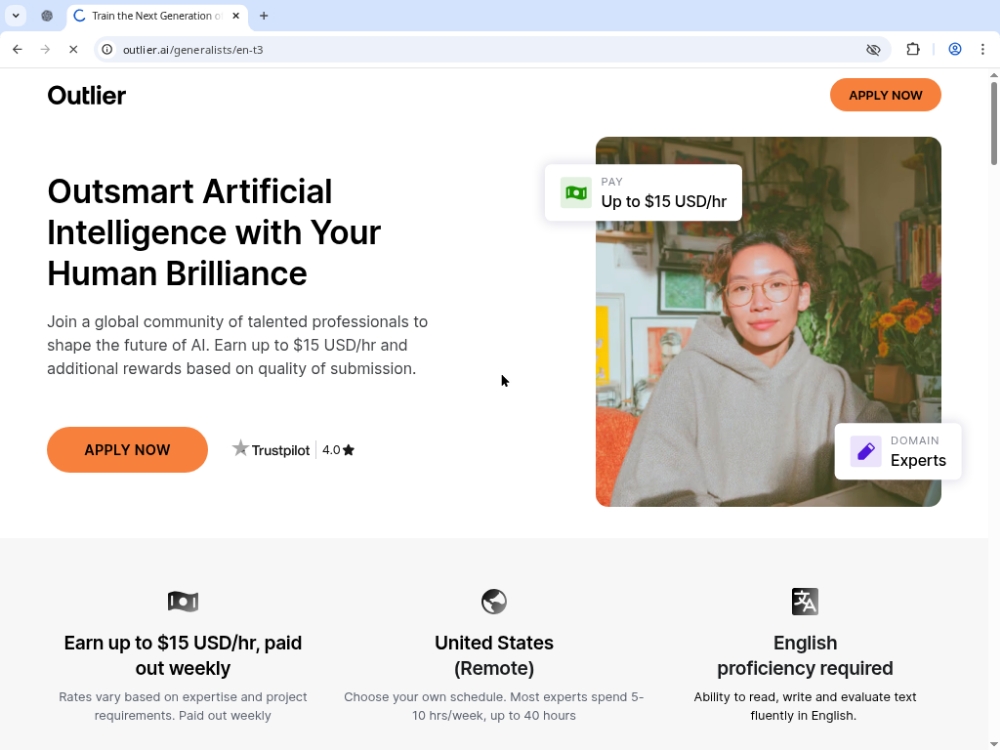
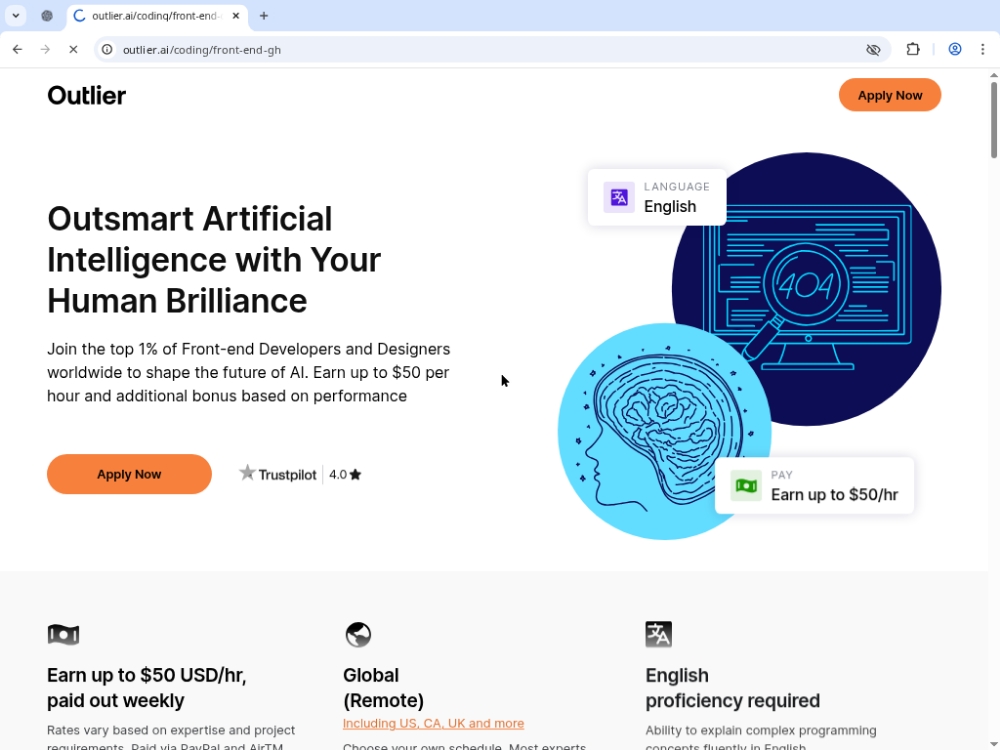
Reported earnings vary by project type and expertise level, but the common range sits around $15 to $50 per hour.
Here’s the rough breakdown:
- General writing / editing tasks: $15–$25/hour
- Math / reasoning tasks: $20–$40/hour
- Coding / software tasks: $25–$50/hour
- Audio / video annotation: $18–$35/hour
Some part-time contributors report making around $800 per week, while others use it as a side income stream that adds up to thousands over time.
The platform also pays weekly, which is a strong point if cash flow matters.
Why people are paying attention to Outlier AI
There are a few reasons this platform stands out.
Flexible remote work
You can work from wherever you are, and there are no minimum hour requirements. That matters if you want something that fits around school, freelancing, or another job.
Better pay than low-end task sites
A lot of microtask platforms are trash. They pay peanuts for repetitive work that barely moves your wallet. Outlier is different because the work requires actual brainpower, so the pay ceiling is much higher.
Hands-on AI experience
This part matters more than most people realize.
If you’re involved in prompt writing, model evaluation, or expert review, you’re not just earning. You’re building **real exposure to how modern AI systems are trained**.
That can strengthen your CV and sharpen your understanding of where the AI economy is heading.
Weekly payouts
Outlier promotes weekly payments, which makes it more attractive than platforms that delay earnings forever or create drama around withdrawals.
Who Outlier AI is really for
Outlier is not best for people who want easy money with no skills.
The platform prefers people with undergraduate-level expertise or higher, and many higher-paying projects lean toward people with advanced academic or technical backgrounds. Graduate students, master’s holders, and PhDs have an edge.
Strong areas include:
- Coding and software engineering
- Mathematics and STEM
- Languages and translation
- Writing and editing
- Law, medicine, and scientific review
So if someone thinks this is just “sign up and start cashing out,” that idea is weak.
Outlier wants people who can think critically and work accurately.
The onboarding reality nobody should ignore
This is where a lot of people get slapped by reality.
To get in, contributors usually go through:
- Profile creation
- Skill screening
- Identity verification
- Project-specific onboarding
There are assessments. There is filtering. There is competition.
And yes, one of the biggest complaints is that some of this onboarding is unpaid.
That means you may spend time proving yourself before you ever touch paid work.
For serious experts, that may still be worth it.
For lazy people hunting effortless cash, this is where the dream dies.
The biggest drawbacks
This is the section people skip when they’re blinded by money. Don’t.
Inconsistent task availability
This is the biggest issue.
You can have a good run of projects, then suddenly hit an empty queue. That means income can be unstable.
So no, this is not something you should blindly treat like a safe full-time salary.
Strict quality control
Outlier is not paying people to freestyle garbage.
If your ratings drop, your work quality slips, or you fail task standards, you can lose access to projects or get pushed into lower-quality opportunities.
Unpaid training and assessments
A lot of users complain about spending time onboarding without immediate pay. That criticism is valid.
Slow support during disputes
Some contributors report delays when dealing with payment or project issues. That can be frustrating if something goes wrong and you need answers fast.
Competitive entry
Not everyone gets accepted, and not everyone who gets accepted gets consistent work.
That’s a brutal truth people should understand before getting emotionally attached to the platform.
So, is Outlier AI legit?
Yes, Outlier AI appears to be legitimate.
It is operated by Scale AI, collaborates with major AI companies, pays contributors weekly, and has built a large contributor base globally.
That said, legit does not mean perfect.
A platform can be real and still be inconsistent, selective, and annoying.
That is exactly what seems to be happening here.
Who should seriously consider it?
Outlier AI makes the most sense for people who want:
- A flexible side hustle
- Remote work they can do from anywhere
- Better-than-average task pay
- Exposure to AI training work
- A way to monetize existing expertise
It is strongest for people with technical, analytical, or language-heavy skills.
If you have no real expertise and hate assessments, this probably isn’t your lane.
Final verdict
Outlier AI is not magic money.
It is not some mystical “click buttons and get rich” system.
It is a real opportunity for skilled people to earn by helping train AI models, and for the right person, it can absolutely become a solid side income stream.
But let’s keep it honest:
- The pay can be strong
- The flexibility is real
- The legitimacy is there
- The instability is also real
- The onboarding friction is real
- The competition is real
So can training AI become your next high-paying side hustle?
Yes, but only if you have real expertise, patience, and the discipline to treat it like a serious opportunity instead of a fantasy.
That’s the difference between people who make money from new platforms early and people who just scroll past them.
If you want to explore the platform yourself, you can check it out here:
https://outlier.ai/