The Beginner’s Complete Guide to Navigating Crypto, Web3, and Blockchain (Without Getting Lost)

The Beginner’s Complete Guide to Navigating Crypto, Web3, and Blockchain (Without Getting Lost)
If you’re just getting started in crypto, you’ve probably heard terms like blockchain, Web3, DeFi, NFTs, airdrops, gas fees, and self-custody. It can feel overwhelming.
But here’s the truth: crypto and Web3 are not as complicated as they sound. Once you understand the foundations, everything starts to connect.
This 4,000-word beginner-friendly guide will walk you step-by-step through:
What blockchain really is
How crypto works
What Web3 means
How to set up your first wallet
How to avoid scams
How to actually navigate this space safely and confidently
Let’s break it down in simple language.
1. What Is Blockchain? (Explained Like You’re 15)
At its core, blockchain is just a digital record book.
Imagine a notebook that:
Is shared with thousands of people
Updates in real time
Cannot be erased or edited
Is publicly verifiable
That notebook is a blockchain.
One of the earliest and most important blockchains is Bitcoin. It was created in 2009 as a decentralized digital money system. Instead of a bank verifying transactions, thousands of computers around the world do the verification.
Each “block” contains:
A list of transactions TV
A timestamp
A unique code
A reference to the previous block
That’s why it’s called a chain of blocks.
Why Blockchain Matters
Before blockchain:
Banks controlled money
Governments controlled records
Companies controlled your data
With blockchain:
You can hold your own assets
Transactions are transparent
No single authority controls the system
That’s the foundation of Web3.
2. What Is Cryptocurrency?
Cryptocurrency is digital money that runs on blockchain.
Unlike traditional currency:
It’s decentralized
It’s borderless
It’s programmable
Some of the most popular cryptocurrencies include:
Bitcoin – Digital gold
Ethereum – Smart contract platform
Solana – High-speed blockchain
BNB – Utility token of Binance ecosystem
Each blockchain has its own ecosystem and purpose.
3. What Is Web3?
If Web1 was “read-only” (basic websites)
And Web2 is “read and write” (social media)
Then Web3 is “read, write, and own.”
Web3 is the decentralized version of the internet powered by blockchain.
In Web2:
Instagram owns your content
Banks hold your money
Platforms can ban you anytime
In Web3:
You own your wallet
You control your assets
Your identity lives on-chain
Web3 apps (dApps) run on blockchains instead of centralized servers.
Examples include:
Decentralized exchanges
NFT marketplaces
Play-to-earn games
DAO governance platforms
4. Understanding Wallets (Your First Step)
Before you do anything in crypto, you need a wallet.
A crypto wallet does NOT store your coins. It stores your private keys.
Think of it like:
Public key = Your account number
Private key = Your password
If someone has your private key, they control your funds.
One of the most popular wallets is MetaMask. It allows users to interact with Ethereum and other networks.
There are two types of wallets:
1. Custodial Wallets
Examples:
Binance
Coinbase
They hold your private keys for you.
Pros:
Easy to use
Good for beginners
Cons:
“Not your keys, not your coins”
Can freeze accounts
2. Non-Custodial Wallets
Examples:
MetaMask
Trust Wallet
You control your keys.
Pros:
Full ownership
True decentralization
Cons:
If you lose your seed phrase, it’s gone forever
5. What Is a Seed Phrase?
When you create a wallet, you get 12–24 random words.
That’s your seed phrase.
It is:
The master key to your wallet
The only way to recover funds
Never:
Screenshot it
Send it to anyone
Store it online
Write it down physically and keep it safe.
6. Smart Contracts Explained
A smart contract is just code that runs automatically on a blockchain.
Most smart contracts run on Ethereum.
Example:
You send 1 ETH
The contract sends you an NFT automatically
No middleman. No human approval.
Smart contracts power:
DeFi
NFTs
DAOs
Lending platforms
7. What Is DeFi?
DeFi stands for Decentralized Finance.
Instead of:
Banks
Brokers
Financial institutions
You use blockchain protocols.
Examples:
Borrowing crypto
Lending crypto
Staking
Yield farming
Popular DeFi protocols include:
Uniswap
Aave
PancakeSwap
These platforms allow you to swap tokens without a centralized exchange.
8. NFTs for Beginners
NFT means Non-Fungible Token.
It represents unique ownership on blockchain.
NFTs can be:
Art
Music
Gaming assets
Domain names
One of the biggest NFT marketplaces is OpenSea.
NFTs are stored in your wallet, not in the marketplace.
9. How Beginners Lose Money (And How to Avoid It)
Let’s be honest.
Crypto is risky.
Here’s how beginners usually lose money:
1. FOMO (Fear of Missing Out)
Buying at the top because Twitter says “moon.”
2. Rug Pulls
Developers abandon a project after collecting funds.
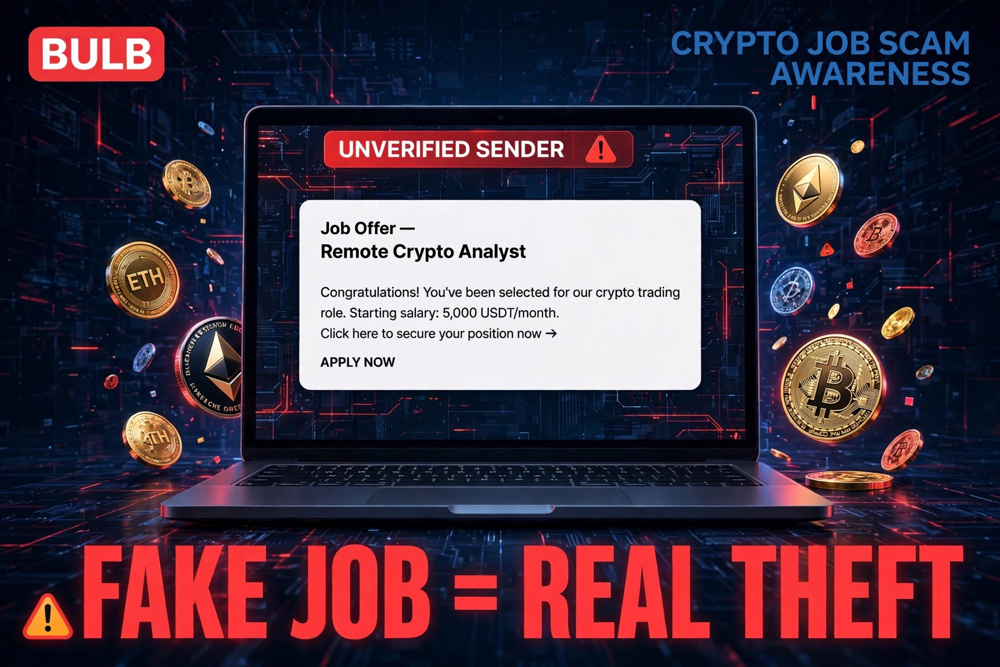
3. Phishing
Fake websites pretending to be real platforms.
4. Sending Funds to Wrong Network
Sending Ethereum to a non-compatible chain.
5. Leverage Trading
Using borrowed money and getting liquidated.
Avoid these mistakes:
Double-check URLs
Don’t click random links
Use hardware wallets for large funds
Never share seed phrase
10. Gas Fees Explained
Gas fees are transaction fees paid to validators.
On Ethereum, gas fees can be expensive during high traffic.
Other networks like Solana offer lower fees.
Always check fees before confirming transactions.
11. Centralized vs Decentralized Exchanges
Centralized Exchanges (CEX)
Examples:
Binance
Coinbase
Pros:
Easy
Fiat deposits
Cons:
Custodial risk
Decentralized Exchanges (DEX)
Examples:
Uniswap
PancakeSwap
Pros:
No KYC
Self-custody
Cons:
Requires wallet knowledge
12. DAOs (Decentralized Autonomous Organizations)
A DAO is a community-run organization governed by smart contracts.
Members vote using tokens.
No CEO. No board of directors.
Everything is transparent.
13. How to Start as a Beginner (Step-by-Step)
Step 1: Learn basics (you’re doing that now).
Step 2: Create a small exchange account.
Step 3: Buy a small amount of crypto.
Step 4: Create a non-custodial wallet.
Step 5: Transfer small funds to practice.
Step 6: Explore DeFi and NFTs slowly.
Start small. Always test with small amounts.
14. Crypto Security Checklist
Use 2FA
Use hardware wallet for large funds
Separate long-term and trading wallets
Bookmark official sites
Avoid public WiFi
Don’t trust “support” in DMs
15. Market Cycles: Bulls and Bears
Crypto moves in cycles:
Bull market:
Prices rise fast
Everyone is excited
Bear market:
Prices crash
Builders keep building
Understanding cycles helps you avoid emotional decisions.
16. Long-Term Mindset vs Short-Term Trading
Short-term trading:
High stress
High risk
Long-term investing:
Research-based
Patience-driven
Beginners should focus on learning before trading.
17. Web3 Career Opportunities
Web3 isn’t just investing.
You can:
Write threads
Create educational content
Design NFTs
Code smart contracts
Moderate communities
Since you’ve shown interest in crypto content before, you could monetize by:
Blogging
Twitter threads
Medium articles
Community management
18. Final Advice for Beginners
Crypto is not a get-rich-quick scheme.
It’s:
A new financial system
A new internet model
A new ownership structure
Focus on:
Security
Education
Patience
Don’t rush. Don’t overinvest. Don’t gamble blindly.
Conclusion
Web3 and blockchain are transforming finance, ownership, and digital identity.
As a beginner:
Start small
Stay curious
Protect your keys
Think long-term
Crypto rewards those who learn before they earn.