Prompt Engineering Is Dead…kind of

If you spent any time on AI Twitter in the last two years, you’ve probably seen the same promise on repeat. Learn prompt engineering and never work again, or something along those lines. For a while, it even felt half‑true. Models were dumber, syntax tricks felt like magic, and being good at prompts was a weirdly marketable skill, with blog posts and guides popping up to teach “advanced prompting” like it was a new programming language.
In 2026, that story is breaking down. Models are smarter, agents are doing more of the heavy lifting, and companies are quietly realizing they don’t actually want prompt wizards 🧙 as much as they want people who understand problems, systems, and context. The irony is that prompt engineering isn’t really dying at all, it’s just moving up the stack and changing shape into what people are starting to call context engineering and problem engineering.
How we got addicted to prompt hacks

Prompt engineering started as a survival instinct. Early GPT‑style models were powerful but extremely literal. If you asked a fuzzy question, you got a fuzzy answer, and sometimes a very confident wrong one. People discovered that if you structured your asks with things like “act as a…”, “step by step…”, or “use this format…”, you could pull way better results out of the same model, and that turned into a cottage industry of prompt packs, templates, and guru courses.
Over a couple of years, that folk wisdom solidified into pattern libraries. Role prompts, chain‑of‑thought prompts, few‑shot prompting, and tool‑calling patterns were documented in ultimate guides and technical blogs that treated prompts almost like code snippets, like Lakera’s Ultimate Guide to Prompt Engineering in 2026 or Erlin’s Complete Guide to Prompt Engineering in 2026. The upside was that non‑engineers suddenly had leverage over serious AI models just by typing better English. The downside was that we collectively started treating prompt engineering as if it were the skill. Instead of what it really is, a UX layer over an opaque model that you don’t fully control.
By the time we hit the mid‑2020s, you had people selling prompt bundles like cheat codes, while serious AI teams were already quietly moving on to wiring models into data, tools, and workflows behind the scenes, as you can see in pieces like Prompt Engineering for Real Business Workflows on LinkedIn.
2026 reality check, models changed, the job changed

Fast‑forward to 2026 and the landscape looks very different. Modern LLMs are dramatically better at following messy instructions, maintaining context across longer interactions, and self‑correcting when they detect inconsistencies, as reflected in IBM’s 2026 Guide to Prompt Engineering and similar technical overviews. At the same time, most valuable use cases no longer look like “one prompt in, one answer out.” They look like multi‑step workflows and agentic systems that reason, call tools, and iterate toward a goal.
Enterprise AI has shifted from basic chatbots to what analysts call agentic systems. AI agents that can retrieve documents, hit APIs, update CRMs, and loop until certain conditions are met, something you see everywhere from community roundups like Prompt Injection’s AI News to more formal workflow guides. In that world, the person who can hand‑craft a clever one‑liner is nice to have, but not core. What organizations actually value is someone who can define a problem in plain language, break it into steps an AI can execute, and wrap those steps in the right context, data sources, and guardrails so they don’t blow up in production.
That’s not really about magic phrasing. That’s systems thinking, product thinking, and a bit of ops, which is exactly why pieces like Bernard Marr’s “Why Prompt Engineering Isn’t The Most Valuable AI Skill In 2026” on his personal site and various future‑of‑prompt‑engineering outlooks keep hammering on problem formulation and judgment as the real differentiators.
From prompt engineering to context design

The quiet evolution in 2026 is that the hardest part is no longer the literal wording of the prompt. It’s the context you wrap around it. Analysts and practitioners are increasingly talking about context engineering or context design. Building reusable, structured information environments that prompts live inside, instead of throwing giant “super prompts” at the model and praying.
A great explainer from SDG Group on The Evolution of Prompt Engineering to Context Design in 2026 describes this as moving from static prompts to a dynamic information ecosystem, where AI agents operate on continuous streams of data, history, and user preferences rather than a single instruction. Other pieces from deepset’s Context Engineering: The Next Frontier Beyond Prompt Engineering and Sombra’s Guide to AI Context Engineering in 2026 echo the same shift. Prompt engineering tells the model how to talk, but context engineering controls what it sees when it talks, and that’s where most of the performance gains are coming from now.
In practice, that means instead of rewriting the same long prompt over and over, you define brand voice once, customer personas once, constraints once, and store them as reusable concepts or knowledge layers that multiple prompts and agents can tap into, which is how serious platforms and internal “AI brains” are starting to structure their systems.
AI is now your co‑pilot in writing prompts

Another reason “pure” prompt engineering is overrated this year is that AI is getting pretty good at helping you write prompts. A lot of modern tooling bakes in what Refonte Learning calls AI‑assisted prompting or adaptive prompting in their Optimizing Interactions with Language Models (2026 Guide). You type a messy goal, and the system suggests refinements, flags ambiguities, or even builds a sequence of prompts for you before you run anything. When I am trying to build a good prompt for a project I am creating, I type out my idea and then have Perplexity create a detailed prompt so Claude knows exactly what I want done and how to do it.
That means beginners are being auto‑upgraded from terrible prompts to decent ones by default, thanks to real‑time analysis and suggestion systems. Guides from DataCamp, IBM, and others now talk about iterative prompting and chain prompting as normal practice, where you and the model co‑design the instructions step by step rather than trying to nail it in one shot. Experts, meanwhile, spend less time hand‑crafting each sentence and more time defining flows, evaluation criteria, and how prompts interface with tools and data.
So the value isn’t “I know the secret magic words.” The value is “I know what good looks like, and I can steer the system toward it using the tools the system itself gives me.”
Prompt engineering grew up into orchestration

The most interesting work in 2026 isn’t any single prompt, it’s orchestration. Instead of “ask once, answer once,” advanced systems chain multiple prompts together, pass structured data between them, and treat prompts like components in a pipeline. Articles on prompt orchestration and AI agent platforms, like Maxim AI’s Top 5 Prompt Orchestration Platforms for AI Agents in 2026 and Big Blue Academy’s Death of Prompt Engineering: AI Orchestration in 2026, describe setups where dozens or hundreds of prompts are managed, versioned, and monitored across complex workflows.
A typical real‑world flow might interpret a user request with one prompt, decide which tools or APIs to call with another, then synthesize results with a third, all wrapped inside an orchestration layer that handles retries, evaluations, and fallbacks. Prompt templates here are version‑controlled, A/B tested, and optimized for cost and latency just like any other software component, which is why orchestration tools emphasize observability, experimentation dashboards, and shared prompt libraries across teams.
This is also where cost optimization comes in. Orchestration lets you have cheaper models handle routing, filtering, and preprocessing while expensive models only touch the parts that actually demand their reasoning capabilities, something multiple 2026 guides explicitly recommend as a best practice.
The real skills replacing “prompt wizards”

So if being good at prompts is no longer the final boss, what is? A cluster of unsexy but very durable skills that sit around the prompts.
The first is problem formulation, which several thought pieces now call problem engineering. You can see this in discussions like The Death of Prompt Engineering: Why 2026 is About Problem Formulation, Not Syntax and Bernard Marr’s take on why problem framing beats clever wording in the long run. The second is domain understanding, because a finance copilot, a healthcare assistant, and a marketing content agent need different data, constraints, and failure modes baked in from day one, not just different adjectives in a prompt.
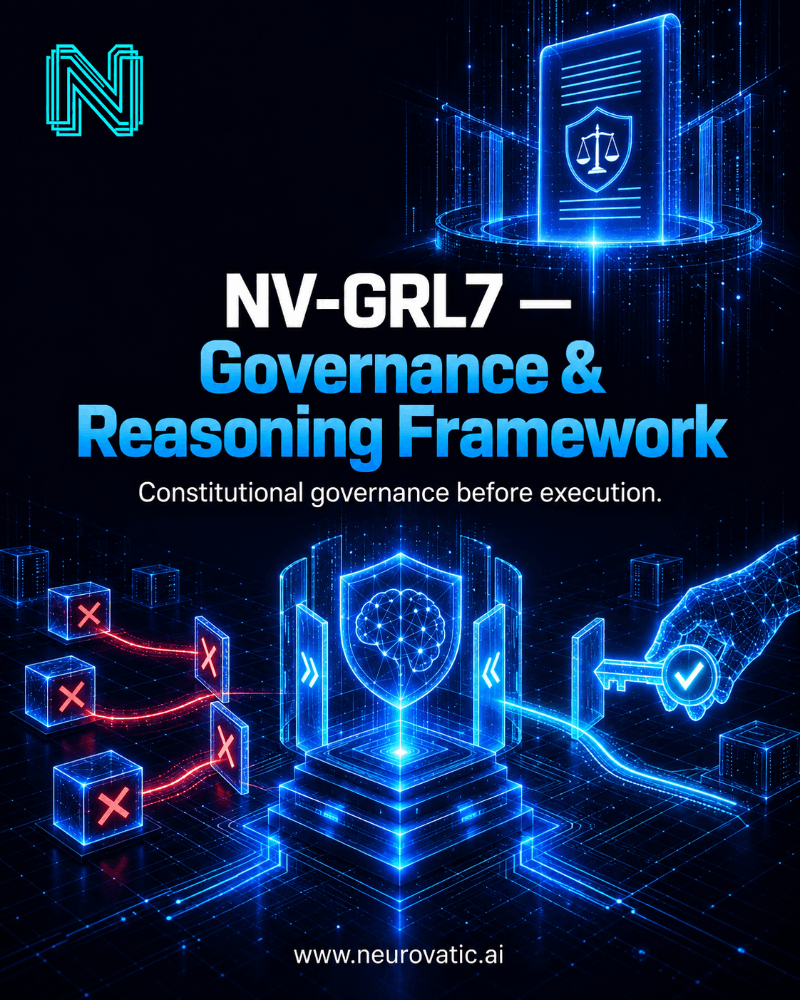
Then you have context and data wiring, which is where context engineering really lives. Connecting models to retrieval systems, internal knowledge bases, and tools so they operate with grounded context instead of hallucinating, as outlined in deepset’s context engineering guide. On top of that, there’s evaluation and guardrails. Building prompt systems with monitoring, safety constraints, and bias checks, something you see emphasized in forward‑looking prompt engineering guides and in orchestration platform docs talking about continuous evaluation and human‑in‑the‑loop oversight.
Prompt patterns and tricks still matter, but they live inside that bigger skill stack, the same way knowing syntax matters in programming but doesn’t make you a good engineer on its own.
What this means if you’re learning prompt engineering in 2026

If you’re currently grinding prompt engineering tutorials, the goalposts have moved, but they haven’t disappeared. The better 2026 guides treat prompt engineering as an entry point into bigger, more durable skills instead of selling it as a standalone career moat.
The sane path looks something like this. You learn the core patterns like role prompting, few‑shot prompting, chain prompting, tool and function calling. Using up‑to‑date resources from places like Lakera’s prompt engineering guide, IBM’s 2026 playbook, and hands‑on explainers from platforms like Erlin. Then you immediately apply those patterns in a real context you care about, whether that’s content creation, data analysis, customer support, or coding, and you push yourself to design small multi‑step workflows instead of single shots.
From there, you start thinking and building at the orchestration and context layer. You wire in retrieval, define re‑usable concepts for your voice and policies, and experiment with AI‑assisted prompting tools that help you refine instructions and measure quality over time. If you read the current wave of “death of prompt engineering” and context‑engineering essays with that mindset, they stop sounding like obituaries and more like roadmaps for where your skills actually need to go.
Stop worshiping prompts, start designing systems
So when I say prompt engineering is dead, I don’t mean you should never think about prompts again. I mean the way we talk about it (as if memorizing clever strings is a golden ticket) is stuck in 2023, while the field has already moved on to context, orchestration, and problem design. Selling prompt sheets like cheat codes made sense when the tools were new and brittle, but in 2026 it’s a bit like selling Google search templates as a career plan.
The real leverage is one layer up. It lives in understanding what the business or creator actually needs, shaping that into a clear problem, and then using models, tools, context, data, and yes, prompts, to solve that problem in a reliable, repeatable way. Which is exactly what you see in serious workflow case studies and orchestration write‑ups. The prompt is still in the loop, it’s just no longer the star of the show.
If you shift your focus from “I need the perfect prompt” to “I need a robust system that consistently produces the outcomes I care about,” you’re automatically ahead of most prompt discourse and much closer to where the actual opportunities are as AI matures and commoditizes basic prompting techniques. And the nice side effect is that you won’t panic every time a new model lands and half your old hacks mysteriously stop working.
I have a list full of prompts I use on a daily basis. Do you copy and paste prompts? Are you prepared for what AI is turning into? Let me know in the comments.
Thanks for reading everyone! Visit my site to learn more about me and explore what I’m building at Learn With Hatty. Remember, stay curious and keep learning.