How Decentralization Has Positively Impacted Web3

The rise of Web3 marks a fundamental shift in how the internet operates, moving away from centralized control toward distributed, user-driven systems.
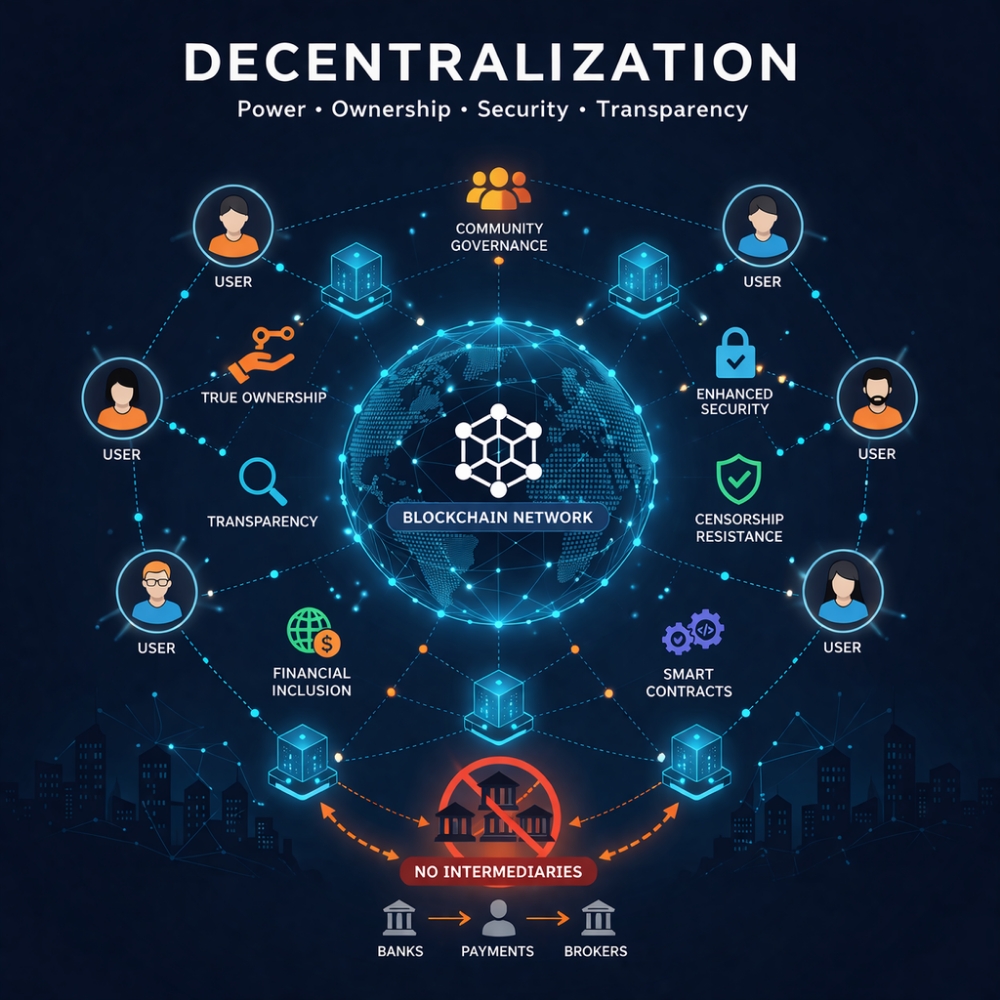
At the heart of this transformation lies decentralization, a concept that has reshaped digital ownership, governance, finance, and trust. While still evolving, decentralization has already delivered several meaningful benefits that are redefining online interaction.
1. Empowering True Ownership
One of the most significant contributions of decentralization in Web3 is the concept of true digital ownership.
In traditional Web2 systems, users create content and data, but platforms ultimately control it.
Accounts can be suspended, content removed, or access restricted without user consent.
In contrast, decentralized systems enable users to own their assets directly through cryptographic keys. Whether it's digital art, in-game items, or identity credentials, users maintain control without relying on intermediaries.
This shift not only empowers individuals but also introduces new economic opportunities where creators can monetize their work more fairly.
2. Increased Transparency and Trust
Decentralized networks operate on public ledgers, where transactions and activities are recorded transparently.
This openness reduces the need for blind trust in centralized authorities. Instead, users can independently verify actions, ensuring accountability across the system.
For example, decentralized finance (DeFi) platforms allow users to inspect smart contracts and transaction histories, creating a more transparent financial ecosystem. This level of visibility helps reduce fraud and builds confidence among participants.
3. Censorship Resistance
Centralized platforms often have the power to restrict content or access based on policies, regulations, or external pressures. While moderation is sometimes necessary, it can also lead to unfair censorship or suppression of voices.
Decentralization mitigates this issue by distributing control across a network rather than a single authority. As a result, no single entity can unilaterally block access or remove content, making Web3 platforms more resilient to censorship and enabling freer expression.
4. Financial Inclusion
Web3 has significantly expanded access to financial services through decentralized finance. Traditional banking systems often exclude individuals due to geographic, economic, or bureaucratic barriers.
Decentralized platforms, however, only require an internet connection and a digital wallet. This accessibility opens the door for millions of unbanked and underbanked individuals to participate in global finance sending money, earning interest, or accessing credit without intermediaries.
5. Reduced Reliance on Intermediaries
Decentralization eliminates the need for many middlemen who traditionally facilitate transactions, such as banks, brokers, or payment processors. Smart contracts self-executing code automate agreements and transactions securely.
This not only reduces costs but also increases efficiency and speed. Transactions that once took days can now be completed in minutes or seconds, often with lower fees and fewer complications.
6. Community-Driven Governance
Web3 introduces new models of governance through decentralized autonomous organizations (DAOs). Instead of decisions being made by a centralized leadership team, stakeholders can vote on proposals and influence the direction of a project.
This participatory approach fosters stronger communities and aligns incentives between users and developers. It also promotes fairness, as decisions are made collectively rather than imposed from the top down.
7. Innovation Without Permission
In decentralized ecosystems, developers can build and deploy applications without needing approval from a central authority. This permissionless innovation accelerates creativity and experimentation.
As a result, Web3 has seen rapid growth in areas like decentralized finance, gaming, identity systems, and digital art. The open nature of these platforms encourages collaboration and continuous improvement.
8. Enhanced Security Through Distribution
Centralized systems often represent single points of failure, making them attractive targets for hackers.
Decentralized networks distribute data and operations across multiple nodes, reducing vulnerability.
While no system is completely immune to attacks, decentralization increases resilience by making it significantly harder for malicious actors to compromise the entire network.
To crown it all, decentralization is more than just a technical concept. it is a paradigm shift that redefines how power, ownership, and trust are distributed online. By empowering users, enhancing transparency, and fostering innovation, decentralization has laid the foundation for a more open and equitable internet.