ICO Marketing Campaign: How to Build a Strong Pre-Launch Community

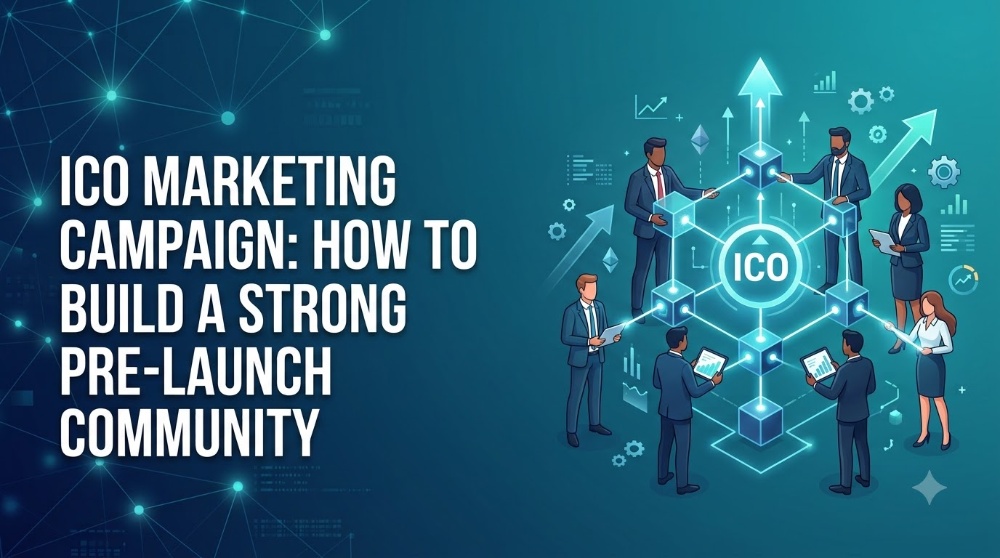
This makes pre-launch community building one of the most important parts of an ICO marketing campaign. A large Telegram or Discord member count may look impressive, but numbers alone do not indicate whether a project has built genuine interest. A stronger approach focuses on attracting relevant users, educating them about the project, maintaining transparent communication, and creating a community that can support long-term adoption.
The importance of this approach has increased as regulators have paid closer attention to crypto promotions. The U.S. Securities and Exchange Commission has repeatedly warned that certain token offerings can fall under securities laws and that promotional activities can create legal obligations. In August 2026, the SEC also proposed a new framework for certain crypto-asset investment contracts, including proposed exemptions and disclosure requirements. The proposal is not yet final, so projects should obtain jurisdiction-specific legal advice before planning an offering.
Define the Community Before Starting Promotion
The first step in an ICO marketing campaign is identifying who should actually become part of the community.
A blockchain project can attract very different audiences depending on its purpose. A DeFi protocol may need developers, liquidity providers, traders, and researchers. A gaming token may attract players, Web3 gamers, NFT users, and gaming communities. An infrastructure project may need developers and businesses rather than retail token buyers.
This distinction matters because broad advertising can produce thousands of low-value followers who disappear when incentives stop. A smaller community with strong product interest can be much more useful than a large audience attracted only by giveaways.
The project should therefore establish clear audience groups and create messaging around their specific interests. Community growth should answer a simple question: Why would someone want to follow this project before the token launch?
The answer should relate to the product, technology, ecosystem, or problem being solved rather than promises of token appreciation.
Build Trust Before Asking for Investment
Trust is one of the most valuable assets an ICO project can establish before its token sale.
Potential participants want to know who is building the project, what the product does, how the token will function, how funds will be used, and what risks are involved. A vague website combined with aggressive promotional messages can quickly create suspicion.
A strong pre-launch community should therefore receive useful information before receiving sales messages. This can include product updates, technical explanations, development milestones, documentation, team information, token utility, governance plans, and clearly explained risks.
The SEC has specifically cautioned investors to research crypto offerings and has emphasized questions such as who is sponsoring the project, where funds are going, what rights a token provides, and whether promoters are being compensated.
This makes transparency more than a branding exercise. It can become an important part of the project's communication strategy.
Use Telegram, Discord, X, and Content Together
No single social platform should carry the entire pre-launch campaign.
Telegram can work well for announcements, community discussions, and rapid updates. Discord is useful when a project needs more organized conversations across technical, community, gaming, governance, or contributor channels. X can support public discussions, thought leadership, product announcements, and interaction with the wider crypto ecosystem.
The important factor is not simply opening accounts on every platform. Each channel should have a clear purpose.
For example, X can attract new audiences through educational threads and development updates. Those interested users can move into Discord or Telegram for deeper discussions. The website and documentation then provide detailed information that allows community members to independently evaluate the project.
This creates a journey from discovery to education to participation rather than treating social media as a collection of promotional channels.
Create Content That Educates Instead of Hypes
Content should form the foundation of the pre-launch community strategy.
A project preparing for an ICO can publish articles explaining the market problem, technical architecture, token utility, governance structure, roadmap, security approach, and potential use cases. Short-form content can then turn those subjects into X posts, videos, community discussions, and visual explainers.
The strongest content does not simply repeat phrases such as "next-generation token" or "massive opportunity." It explains why the project exists and how its technology works.
A hypothetical blockchain infrastructure project, for example, could publish a technical article explaining how its network handles transaction settlement. A follow-up X thread could summarize the architecture, while a Discord session could allow developers to ask technical questions.
This creates multiple opportunities for the same subject to reach different audiences without repeating identical promotional copy.
Turn Community Members Into Participants
A pre-launch community becomes stronger when members have meaningful ways to participate.
Projects can organize AMAs, technical discussions, product demonstrations, developer sessions, community polls, educational workshops, and feedback programs. These activities give people a reason to return even when the token sale is not immediately available.
However, participation should not become a disguised engagement-farming system. Excessive point systems, referral contests, and token giveaways can attract users who are primarily interested in rewards.
A better approach is to reward useful contributions where legally appropriate. Community members might help identify documentation problems, test a product, provide feedback, translate educational material, or participate in governance discussions.
The objective is to develop contributors and informed users, not merely increase message counts.
Work With Relevant KOLs Carefully
Crypto influencers and Key Opinion Leaders (KOLs) can introduce a project to established audiences, but follower count should not be the primary selection criterion.
A smaller creator with an audience interested in DeFi infrastructure may be more valuable for a DeFi project than a celebrity with millions of unrelated followers.
Projects should examine audience relevance, engagement quality, historical content, geographic reach, and disclosure practices before entering promotional relationships.
Regulatory history also demonstrates why transparency matters. The SEC charged Kim Kardashian in 2022 over an undisclosed paid promotion of a crypto asset security and stated that she had received $250,000 for the post. Earlier, the SEC also brought an enforcement action involving Steven Seagal after finding that compensation for promoting an ICO had not been disclosed.
These cases illustrate an important principle for ICO marketing: paid promotion should never be presented as independent opinion.
Measure Community Quality, Not Just Member Counts
A successful pre-launch campaign needs measurable objectives, but the wrong metrics can create misleading results.
Instead of focusing exclusively on Telegram or Discord membership, projects should monitor indicators such as:
- Active members: How many members regularly participate rather than simply joining?
- Engagement quality: Are discussions related to the product, technology, and ecosystem?
- Content performance: Which subjects generate meaningful interaction?
- Community retention: Do members remain active after campaigns or giveaways end?
- Conversion actions: Are users reading documentation, joining product testing, attending AMAs, or signing up for updates?
These measurements provide a clearer picture of whether the audience is developing genuine interest.
For example, a community of 15,000 people with consistent technical discussions and strong retention may provide a healthier foundation than a 100,000-member group where most accounts are inactive.
Make Compliance Part of the Campaign
Compliance should be considered before promotional activity begins, not after the community has already been built.
The legal classification of a token can depend on the project's structure, jurisdiction, rights attached to the asset, marketing statements, and other facts. Calling an asset a "utility token" does not automatically determine its legal status. The SEC has previously emphasized that the substance of an offering matters, including whether promotional efforts create expectations of profit from the work of others.
Marketing teams should therefore coordinate with legal advisers when preparing claims about returns, token value, investment opportunities, endorsements, token sales, and geographic targeting.
This is particularly important because misleading social-media promotion can damage a project even before its token reaches the market. The SEC has also warned investors about social-media investment scams and emphasized that investment decisions should not be based solely on social-media information.
Building a Community That Lasts Beyond the ICO
The strongest pre-launch community is not built around the ICO alone. It is built around the product and the ecosystem that the token is expected to support.
An effective ICO marketing campaign therefore combines audience research, educational content, transparent communication, community participation, carefully selected influencers, measurable engagement, and appropriate legal review.
The goal is not to create the loudest community before launch. It is to create an informed audience that understands the project, recognizes its risks, contributes useful feedback, and has a reason to remain involved after the token sale.
When community building is treated as a long-term relationship rather than a short-term promotional exercise, the pre-launch period becomes more than a countdown to an ICO. It becomes the foundation for the project's broader ecosystem.
Conclusion
Building a strong pre-launch community requires consistent communication, useful content, transparent messaging, and meaningful engagement rather than relying on follower counts or short-term promotions. A well-planned ICO marketing campaign can help projects establish credibility, educate potential users, and create a community that remains engaged beyond the token launch. Blockchain App Factory provides ICO marketing services covering community building, content marketing, social media promotion, influencer outreach, PR, and other campaign activities to help blockchain projects prepare their communities for a successful token launch.