How to Choose the Right Capacity in a Semi Automatic Washing Machine
Choosing the right washing machine capacity is one of the most important decisions when buying a new appliance. A washing machine that is too small may require multiple wash cycles, while a machine that is too large can take up unnecessary space and may not be the most practical choice for your everyday laundry needs. When selecting a semi-automatic washing machine, understanding capacity can help you choose a model that matches your family size, washing habits, available space, and budget.
Semi-automatic washing machines are popular because they offer practical washing performance, simple operation, and greater control over the washing process. Unlike fully automatic machines, semi-automatic models generally have separate wash and spin tubs, which means clothes may need to be moved manually from the wash tub to the spin tub. Because of this design, choosing the correct capacity becomes even more important. The right capacity allows you to wash an appropriate amount of clothing in each cycle without overloading the machine.
What Does Washing Machine Capacity Mean?
Washing machine capacity refers to the maximum weight of dry clothes that the machine can handle during a wash cycle. It is usually measured in kilograms, such as 6 kg, 7 kg, 8 kg, 9 kg, or 10 kg. For example, a 7 kg semi-automatic washing machine is designed to wash up to approximately 7 kg of dry laundry in one wash cycle under suitable operating conditions.
It is important to remember that capacity does not refer to the total weight of wet clothes. Clothes become heavier after absorbing water, but the rated capacity is based on dry laundry. You should also avoid filling the tub beyond its recommended capacity. Overloading can prevent clothes from moving freely, which may affect cleaning performance and put additional strain on the motor.
Consider Your Family Size First
The number of people in your household is one of the easiest ways to determine the right washing machine capacity. A person living alone or a couple generally does not need the same capacity as a family of five or six. However, family size should not be the only factor you consider. Your laundry frequency and the type of clothes you wash also matter.
For one or two people, a 5 kg to 6.5 kg semi-automatic washing machine may be sufficient for regular laundry. This capacity can work well when clothes are washed frequently and the household does not generate large amounts of laundry.
For a family of three to four people, a 6.5 kg to 8 kg washing machine can be a practical choice. This range provides enough space for everyday clothes, towels, bedsheets, and other household fabrics without requiring too many wash cycles.
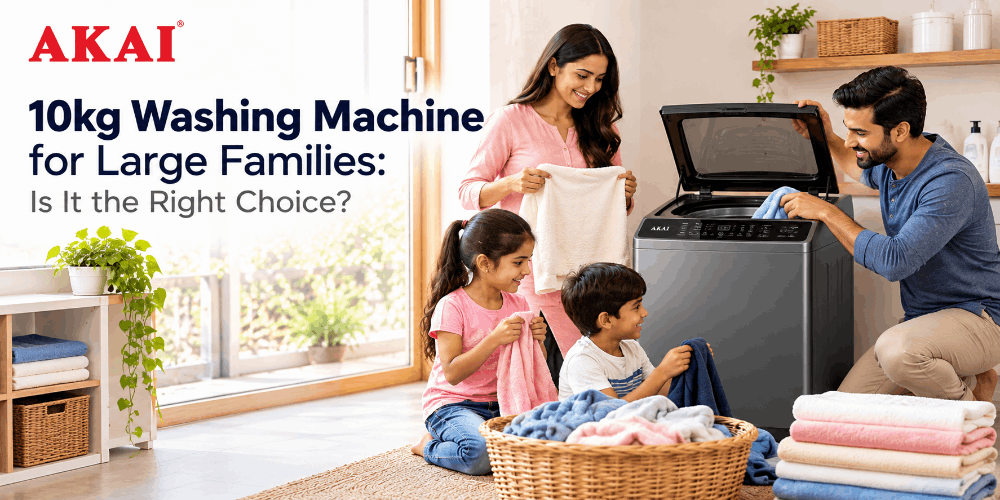
Families with five or more members may benefit from an 8 kg to 10 kg semi-automatic washing machine. A larger capacity can accommodate more clothes in a single cycle and can be especially useful for households that wash laundry in larger batches.
Think About Your Laundry Habits
Family size gives you a starting point, but your laundry habits can change the ideal capacity. Two families of the same size may have very different washing requirements. One family may wash clothes every day, while another may wait several days and wash a large load at once.
If you prefer washing smaller loads frequently, you may not need a very large washing machine. A medium-capacity model can handle regular clothing without taking up excessive space.
On the other hand, if you prefer washing clothes once or twice a week, a larger capacity may be more convenient. It allows you to wash more clothes in fewer cycles, which can save time and reduce the effort involved in managing laundry.
Your lifestyle should therefore play an important role in your decision. Before buying a semi-automatic washing machine, think about how often you normally wash clothes and how much laundry your household produces in a typical week.
Consider the Type of Clothes You Wash
The weight and size of your laundry can also influence your capacity requirements. Everyday clothing may not take up as much space as larger household fabrics. Bedsheets, blankets, curtains, towels, and winter clothing can require significantly more space inside the wash tub.
If you regularly wash bulky items, choosing a slightly larger semi-automatic washing machine can be beneficial. A machine with more capacity provides additional room for clothes to move during washing, which can help improve cleaning results.
For households that mainly wash lightweight daily clothing, a smaller or medium-capacity machine may be enough. However, if you frequently wash large bedsheets, towels, or heavy garments, consider moving up to a larger capacity rather than choosing a machine based only on the number of people in your household.
Do Not Overload the Washing Machine
Choosing a washing machine with the right capacity is important, but using that capacity correctly is equally important. Many people assume that if a machine is rated for 8 kg, they should fill it completely every time. However, the amount of laundry you should put into the machine can vary depending on the type of fabric and washing program.
Overloading can restrict the movement of clothes inside the wash tub. When clothes cannot move freely, detergent and water may not reach all areas effectively. This can result in less effective cleaning and may also increase stress on the washing machine motor.
A properly loaded semi-automatic washing machine should have enough room for clothes to move during the wash cycle. Following the manufacturer's recommended loading guidelines can help maintain washing performance and extend the life of the appliance.
Consider Your Available Space
Capacity is not only about how much laundry you can wash. You should also consider where the washing machine will be placed. Larger-capacity machines can sometimes require more physical space, so measuring your available area before buying is a good idea.
Measure the length, width, and height of the space where you plan to place the machine. Also consider enough room around the appliance for water connections, drainage, ventilation, and comfortable operation.
Semi-automatic washing machines can be convenient for homes where space is limited because they are available in different sizes and capacities. However, it is still important to check the actual dimensions of the model instead of assuming that every machine with the same capacity will have identical dimensions.
Think About Water Usage
Water availability can also influence your decision. Semi-automatic washing machines generally give users more control over water usage because water can be added and drained manually. This can be useful in households where water conservation is an important consideration.
However, a larger washing machine may require more water when washing a full load. This does not necessarily mean that a larger machine is less efficient. If you regularly have large amounts of laundry, washing a full load in one cycle may be more practical than running several smaller cycles.
The key is to choose a capacity that matches your normal laundry volume. A machine that is too large for your everyday needs may not provide the most practical experience, while a machine that is too small may require frequent cycles.
Consider Your Budget
Washing machine capacity can also affect the purchase price. Larger-capacity models may cost more because they can handle bigger loads and may include larger components or additional features.
Before making a purchase, set a realistic budget and compare machines within the capacity range you actually need. Avoid paying extra for a very large machine if your household rarely produces large amounts of laundry.
At the same time, choosing the cheapest model available may not always be the best decision. Look at important factors such as motor performance, wash programs, spin speed, build quality, warranty, and ease of maintenance along with capacity.
Which Capacity Is Right for You?
There is no single washing machine capacity that is perfect for every household. A small household that washes clothes frequently may be comfortable with a 5 kg to 6.5 kg machine. A family of three or four may find a 6.5 kg to 8 kg semi-automatic washing machine more suitable, while larger families or households that wash bulky items regularly may benefit from an 8 kg to 10 kg model.
The most important thing is to consider your actual laundry requirements rather than choosing the largest machine available. A well-sized washing machine can make everyday laundry more convenient and help you avoid unnecessary wash cycles.
Final Thoughts
Choosing the right capacity in a semi-automatic washing machine is about finding the right balance between household size, laundry frequency, clothing type, available space, water usage, and budget. A machine that matches your lifestyle can make washing clothes easier while providing enough room to handle your regular laundry efficiently.
Before buying, consider how much laundry you typically wash at one time, whether you regularly wash bulky items such as towels and bedsheets, how frequently you do laundry, and how much space is available in your home. Once these factors are clear, selecting the right capacity becomes much easier.
Instead of simply choosing the biggest or smallest washing machine, focus on the capacity that fits your everyday needs. Whether you choose a 6 kg, 7 kg, 8 kg, or larger semi-automatic washing machine, the right choice should provide sufficient washing space without making the appliance unnecessarily large for your household. A well-chosen capacity can offer a practical combination of convenience, performance, and value for everyday laundry.