Staking 2.0: How to Put Your ETH to Work on Three Fronts


Part 1: Foundations and Liquidity Architecture
Introduction: The New Economics of "Digital Gold"
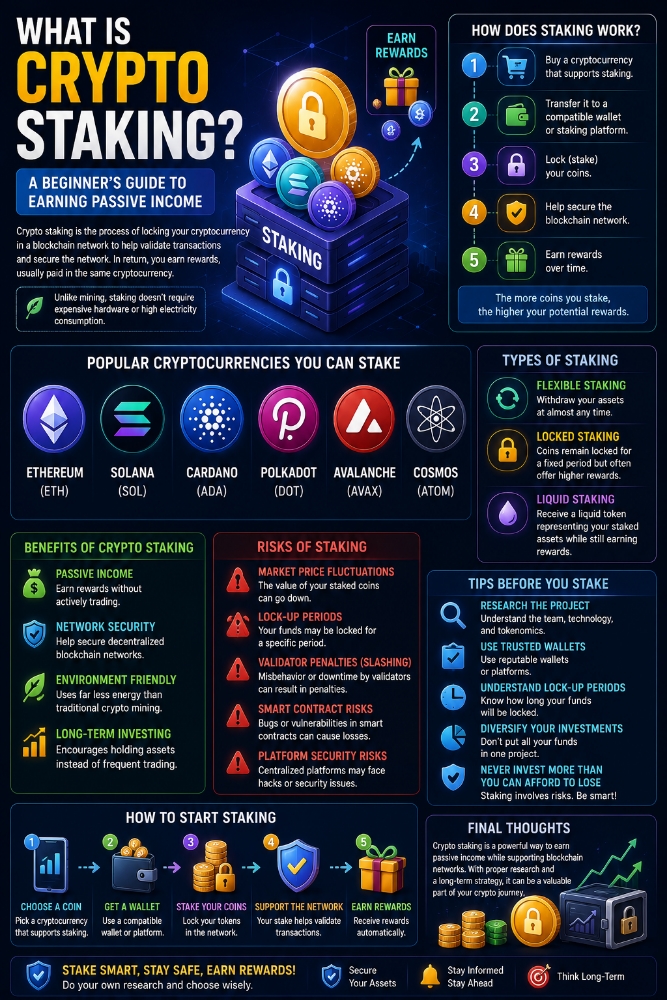
When Ethereum transitioned to Proof-of-Stake, the rules of the game changed permanently. In the Proof-of-Work era, holding an asset was purely speculative: you bought "digital gold," waited for a market cycle, and hoped for capitalization growth. Staking has altered the very ontological status of ETH. Today, holding an unstaked asset is not just "holding"—it is a voluntary refusal of the yield embedded in the protocol's architecture.
If you hold ETH without staking, you are committing a classic capital management error: you possess an asset with inherent self-replication properties, yet you keep the "handbrake" on. As one ecosystem architect once noted, holding ETH without participating in validation is like owning a high-performance engine and keeping it parked in a garage while the market demands energy.
We have entered an era of "composite yield." In this model, ETH is no longer just a coin; it has become the Base Layer Security, collateral for decentralized lending, and the foundation for the services of the future. In this guide, I will deconstruct not just "how to click the stake button," but how to build an architecture of capital that works on three fronts simultaneously. We will journey from the safety of base staking to complex DeFi strategies and the risk management of restaking. This is not material for those seeking "100x" overnight. This is an architectural approach to creating sustainable sovereign capital.

Section 1: The Foundation — Staking Mechanics and the Security Premium
Staking is the fundamental consensus mechanism ensuring the integrity of the Ethereum blockchain. As a validator, you take on the role of a network arbiter: you verify transactions, vote for valid blocks, and ensure the finalization of the network state. In return, the protocol pays you rewards in the form of newly minted ETH and fees collected from users.
Choosing a staking method is the first architectural decision you make. Solo staking requires 32 ETH and 24/7 node operation, which imposes immense responsibility: any failure, downtime, or configuration error is fraught with penalties or even slashing. In my practice, I often see newcomers chase fleeting APY spikes, choosing dubious protocols instead of assessing infrastructure reliability. Remember: staking yield is a premium for the risk you take when trusting an asset to a provider. If you delegate your 32 ETH to pools (Lido, Rocket Pool, etc.), you are effectively purchasing a risk management service. Your success here is the provider's node uptime.
Section 2: Liquid Staking — The Mechanics of Capital Freedom
Liquid staking has radically changed liquidity distribution in the network. Previously, staking meant "freezing" capital. With the advent of LSTs (Liquid Staking Tokens), this problem was solved.
When you deposit ETH into a pool, you receive a "receipt" (stETH, rETH, etc.) that trades on the market almost like the base asset. This provides what I call "active liquidity." You continue to receive staking income, but your asset does not lie dormant—it becomes collateral in lending protocols (Aave, Compound), where you can borrow stablecoins for new market operations. However, risk management hygiene is vital here: watch for LST depegging. If panic hits the market, the price of an LST may temporarily deviate from the base ETH value. For a Sovereign Author, this is a moment to keep a cool head and understand that behind the token lies not just code, but real liquidity on DEXs.


Part 2: DeFi Strategies and Restaking
Section 3: The Second Front — DeFi and "Double Leverage" Strategies
True architectural complexity begins where LSTs integrate into DeFi protocols. Here, your capital ceases to be static and evolves into a dynamic system with "double leverage."
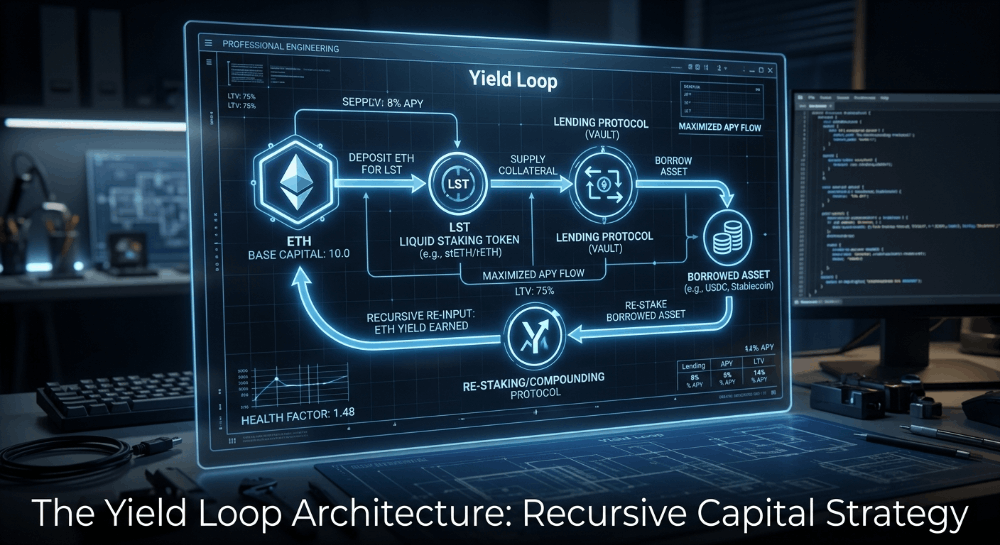
The "Yield Loop" strategy is a tool for those who understand the mathematics of risk. The essence is simple: you use your LSTs as collateral to borrow stablecoins or ETH, which are then re-directed into staking. The yield multiplication effect here is evident, but the price of an error is instant liquidation during a sharp market move. As a capital architect, I always adhere to a strict rule: your Health Factor must have a buffer of 30-40% from the liquidation threshold. Never "squeeze" a position to the limit. In market volatility, the winner is the one who keeps the position open, not the one trying to extract the last percentage of APY at the cost of losing collateral.


Section 4: The Third Front — Restaking and the EigenLayer Paradigm
We are on the verge of a shift in the security paradigm. Restaking is not just a new way to earn; it is the evolution of Ethereum as a "trust platform." Now, the security provided by your staked ETH can be "loaned" to other services—AVSs (Actively Validated Services).
The economics of restaking are extremely attractive, but they introduce a new risk vector: "contagion risk." If you entrust your asset to an AVS with a vulnerable smart contract, a flaw in its logic could lead to your main deposit being subject to slashing—meaning it could be destroyed due to a failure in a third-party protocol. For us, Sovereign Authors, this means that auditing the code of each AVS becomes mandatory reading before any deposit. We are not just looking for high APY; we are evaluating the security architecture of the contracts into which we direct our ETH.

Part 3: Security, Macro-economics, and Conclusion
Section 5: Security Defense — The Sovereign Author’s Protocol
In Web3, security is not just a setting; it is a state of mind. As a capital architect, I operate on the premise that any system can be compromised. Therefore, my defense is built on the principle of layered security.
My "Sovereign Author" protocol is simple but effective:
Hardware Wallet: This is the only acceptable storage standard. Everything else is a temporary solution.
Revoke Approvals: I use tools to check permissions monthly. This is critical hygiene: thousands of users lose assets by forgetting to revoke access rights to their wallets granted to protocols months ago.
Private RPC: Open RPCs are a "feeding trough" for MEV-bots that front-run (buying assets before you, driving up the price). I use private RPC endpoints to hide my transactions until they are included in a block. This is a professional standard of operation that distinguishes the systemic investor from the speculator.


Section 6: Macro-economics — The Future of ETH Liquidity
Staking does not just create yield; it fundamentally changes the market supply of ETH.
[Рис. 9: Изображение аналитического графика, отображающего динамику предложения ETH. Линия предложения плавно идет вниз, символизируя дефляционный эффект. Фон выполнен в стиле профессионального финансового отчета.]
The proliferation of staking and restaking drains liquidity from free circulation. We are witnessing a "scarcity spiral": EIP-1559 burns a portion of the supply with every transaction, and staking locks significant volumes of ETH in the consensus layer. For a Sovereign Author, this means that ETH is becoming an asset with predictable supply reduction and growing demand from institutional validators. This is a long-term fundamental value factor that those who only look at daily charts ignore.
Conclusion: Building Your Sovereign Legacy
Staking is not a way to "get rich overnight." It is a way to convert your capital into an architectural asset that works 24/7. We have journeyed from understanding validator mechanics to using DeFi leverage and defending against risks. Being a "Sovereign Author" in the Web3 world means making conscious decisions at every level: from choosing a staking provider to configuring a private RPC.
Interactive
Which strategy do you adhere to? Do you prefer conservative staking via proven protocols to sleep soundly, or do you choose aggressive restaking in pursuit of maximum APY and airdrops? Share in the comments. If this analysis proved useful to you, please follow my profile and leave a comment below. Engaging with this content directly supports the research and helps our community grow. Don't forget to share your thoughts.
Disclaimer:
Information is for educational purposes only and is not financial advice. Interaction with the blockchain carries the risk of capital loss.