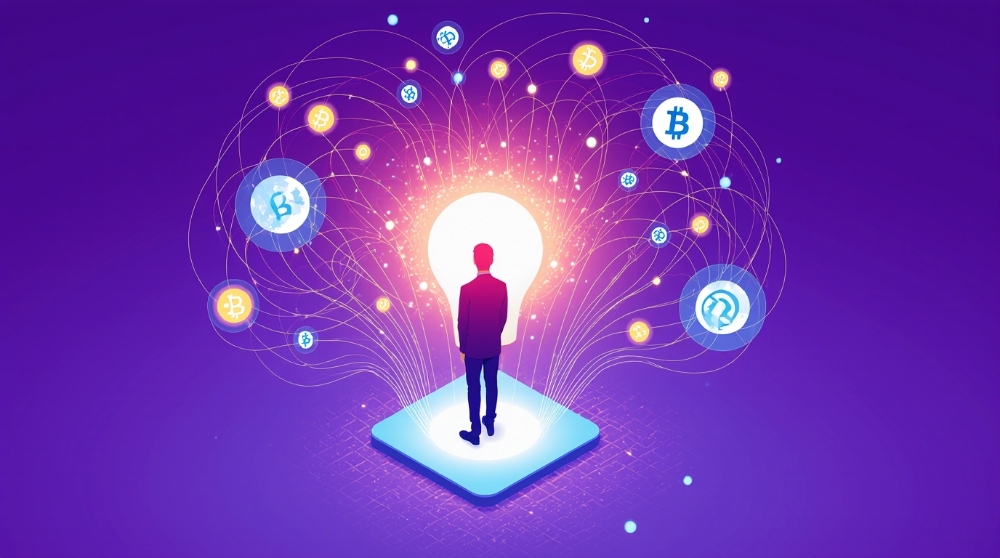
💭 Is Web3 Empowering Individuals… or Creating Digital Dependence?

👀 Introduction
Web3 is often described as a revolution.
A new internet where:
- Users own their data
- Creators control their content
- Communities govern platforms
- Financial power shifts to individuals
It sounds powerful.
It sounds liberating.
But as Web3 grows, a deeper question emerges:
Is Web3 truly empowering individuals… or is it simply creating a new form of digital dependence?
Are we becoming more independent?
Or just dependent on a different system?
Let’s explore both sides of this important debate 👇
🌐 The Promise of Individual Empowerment
Web3 was built as a response to Web2.
In Web2:
- Big tech companies control your data
- Platforms decide your visibility
- Algorithms determine your reach
- Your content can be removed at any time
You create value — but corporations capture the profit.
Web3 proposes something different:
- You own your wallet
- You control your assets
- You decide how to participate
- You can earn directly from your activity
Through blockchain technology, individuals can:
- Send money without banks
- Build without permission
- Govern through decentralized voting
- Monetize their creativity
This feels like empowerment.
And in many ways, it is.
💰 Financial Independence or Token Reliance?
Web3 enables people to:
- Earn tokens
- Invest in decentralized assets
- Participate in digital economies
- Access global financial tools
For many, especially in regions with limited banking systems, this is a breakthrough.
But there’s another side.
As more platforms introduce:
- Token incentives
- Staking mechanisms
- Reward systems
- Yield opportunities
Users may become dependent on:
- Token prices
- Platform rules
- Market fluctuations
Instead of relying on traditional banks, individuals may now rely on:
- Crypto markets
- DeFi platforms
- Volatile ecosystems
Is that independence — or just a new type of reliance?
🔄 From Platform Dependence to Protocol Dependence
Web2 created dependence on:
- Social media algorithms
- Centralized payment systems
- Corporate infrastructure
Web3 removes the corporation… but introduces protocols.
Now users depend on:
- Smart contracts
- Blockchain networks
- Governance votes
- Token economics
If a blockchain fails,
If a smart contract is hacked,
If governance decisions change rules…
Users are still affected.
The power structure may shift — but dependence doesn’t disappear entirely.
🧠 Psychological Dependence in Web3
There’s also a psychological dimension.
In Web3, many users:
- Track token prices daily
- Check wallets constantly
- Monitor rewards and yields
- Follow market trends obsessively
Financialization of participation can create:
- Pressure to optimize behavior
- Anxiety about market swings
- Fear of missing out (FOMO)
Instead of being free from systems, users may feel tied to:
- Market cycles
- Token value
- Digital reputation
Empowerment can quickly turn into attachment.
🚀 The Case for True Empowerment
Despite these concerns, Web3 undeniably offers powerful advantages.
It allows individuals to:
- Launch projects without permission
- Access global markets
- Own digital property
- Participate in governance
Unlike Web2, where value flows upward to corporations, Web3 allows value to circulate within communities.
This can:
- Encourage entrepreneurship
- Promote innovation
- Increase financial inclusion
- Reduce centralized control
For many creators and developers, Web3 represents the first time they truly feel ownership.
That matters.
⚖️ Technology Is Neutral — Usage Defines Impact
Web3 itself is not inherently empowering or harmful.
It’s a tool.
The impact depends on:
- How platforms design incentives
- How communities structure governance
- How individuals choose to participate
If users focus only on speculation and rewards,
dependence may increase.
If users focus on collaboration, innovation, and ownership,
empowerment becomes stronger.
The difference lies in intention.
🌍 Global Perspective: Empowerment in Emerging Economies
In developing regions, Web3 can:
- Provide access to digital finance
- Enable cross-border payments
- Create income opportunities
- Encourage skill development
For someone without access to stable banking systems, Web3 may represent genuine independence.
But volatility and regulatory uncertainty can also introduce new risks.
Empowerment requires education — not just access.
🔐 The Balance Between Freedom and Structure
Complete independence is rare in any system.
Even decentralized systems require:
- Rules
- Governance
- Infrastructure
- Security
The real question isn’t whether Web3 removes dependence completely.
It’s whether it reduces harmful dependence and increases personal agency.
If users have:
- More control
- More ownership
- More participation
Then Web3 moves closer to empowerment.
🔮 The Future: Evolution or Replacement?
Web3 is still evolving.
It may not replace traditional systems entirely.
Instead, it may:
- Coexist with banks
- Integrate with governments
- Adapt to regulation
- Mature over time
As infrastructure improves and education spreads, dependence risks may decrease while empowerment grows.
The future will depend on responsible development and informed participation.
✅ Final Thoughts
So… is Web3 empowering individuals?
👉 Yes — it increases ownership
👉 Yes — it decentralizes control
👉 Yes — it creates new opportunities
But…
👉 It can also create new dependencies
👉 It introduces financial volatility
👉 It may encourage constant digital engagement
Web3 doesn’t automatically guarantee freedom.
It offers the tools for it.
Whether those tools create empowerment or dependence depends on how we use them.
💬 What Do You Think?
Do you feel more independent in Web3?
Or more connected to digital systems than ever?
Share your thoughts 👇