The Invisible Bridge: How Account Abstraction Unlocks Web3 for Everyone
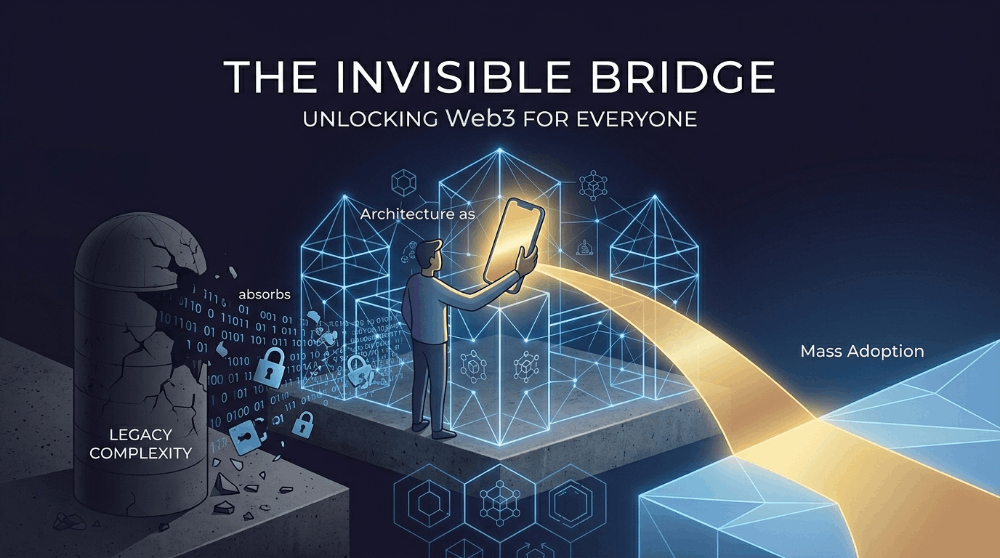
When I first started diving into Web3, I was struck by the contrast: on one hand, these are technologies that are changing the world, and on the other — interfaces that feel like a product of programmers for programmers. I often find myself thinking that for most people, entering Web3 today is not just about learning something new, but about a constant struggle with interfaces where every mistake can cost the loss of assets. The traditional model of managing wallets, based on mnemonic phrases and manual gas configuration, has become the very "bottleneck" that is holding back mass adoption.
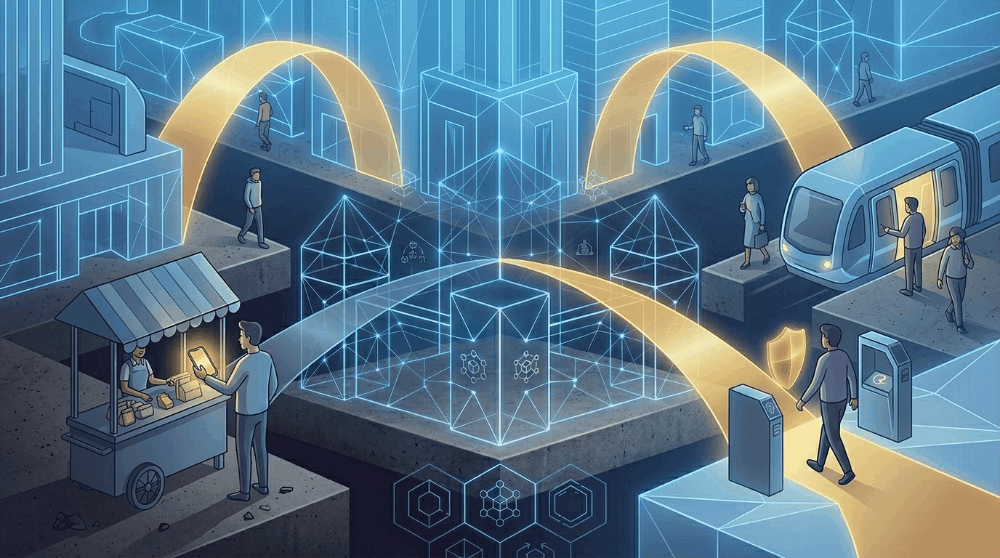
However, I see the industry making a qualitative leap thanks to Account Abstraction. To me, this is not just a technical standard — it is a long-awaited humanization of Web3.
1. The Transition from "Owning a Key" to "Owning Access"
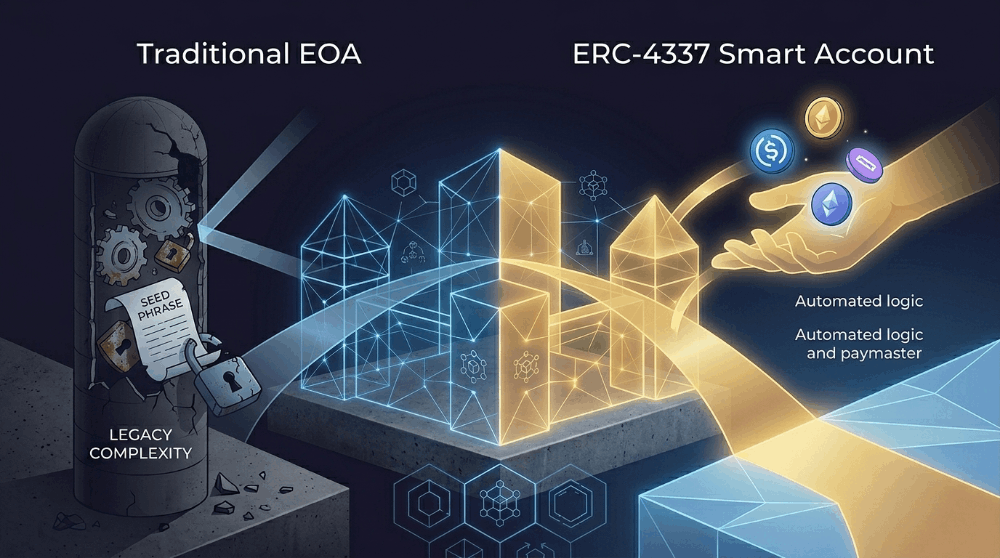
In the wallets we are used to (EOA), we are hostages to a private key. In essence, we are our key. If I lose it or forget the sequence of words, I lose control over my "digital self" forever. I have always considered this model excessively rigid for the mass user.
The ERC-4337 standard changes the fundamental logic: it shifts control from a rigid cryptographic key into the realm of smart contracts. Now, a wallet is not just an address, but a software agent whose behavior I can control. This allows me to flexibly configure the logic of access to my own assets without turning security into torture.
2. Smart Accounts in Action: My Experience Analyzing the Benefits
Upon a detailed study of the capabilities of smart accounts, I have identified four key scenarios for myself that radically change my approach to managing a crypto portfolio:
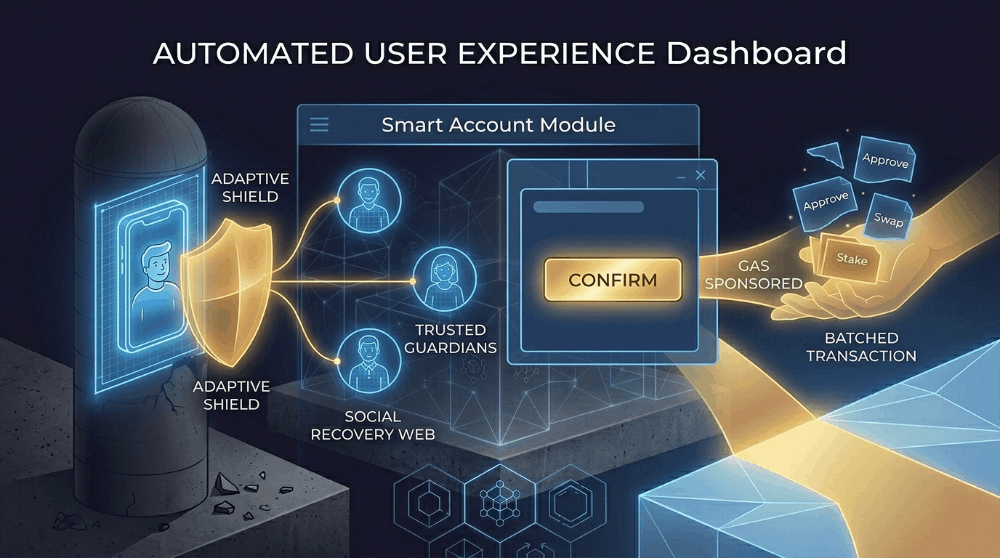
Social Recovery: I have stopped keeping slips of paper with "seeds" in a safe. Smart contracts allow me to delegate recovery rights to "guardians" — trusted devices or friends' wallets. Now I am confident that even if I lose my phone, my access will not vanish.
Flexible Payments via Paymasters: I was always annoyed by the need to hold the native token of a network (like ETH) to pay for gas. With the introduction of Paymasters, I can pay commissions directly in USDC or even not notice them at all if an application covers the costs. This makes the experience of using Web3 applications indistinguishable from regular fintech.
Batching Operations: I no longer sign every transaction individually. A smart account allows me to "glue" several actions together — for example, token approval and the swap itself — into a single operation. This not only saves on commissions but also gets rid of unnecessary clicks.
Security Control: I can set limits: for example, allow automatic payments of up to $50 per day for subscriptions, but require multi-signature for large transfers. I manage risks the way it is convenient for me, not the way the protocol allows.
3. Technology That Fades into the Background
As an expert, I often say: the best UI is its absence. I believe we are moving toward an era where the blockchain will become "under-the-hood" infrastructure. I don’t need to know which protocol is processing a payment or how nodes work; it is important to me that my actions on the network are safe, fast, and understandable.
Account Abstraction is not just another patch. It is a transition to a model where Web3 ceases to be a "sandbox for geeks" and becomes a full-fledged environment for life, creativity, and business. When we remove technical barriers, we pave the way for millions of users who will come to this world not for the sake of "crypto," but for the new opportunities it provides.
Question for the audience:
What obstacle was the most difficult for you when you first got acquainted with a crypto wallet? What would you like to simplify first: managing commissions, the recovery process, or the UX of transactions itself?
Sovereign Author