The Art of Saying "No" Without Feeling Guilty

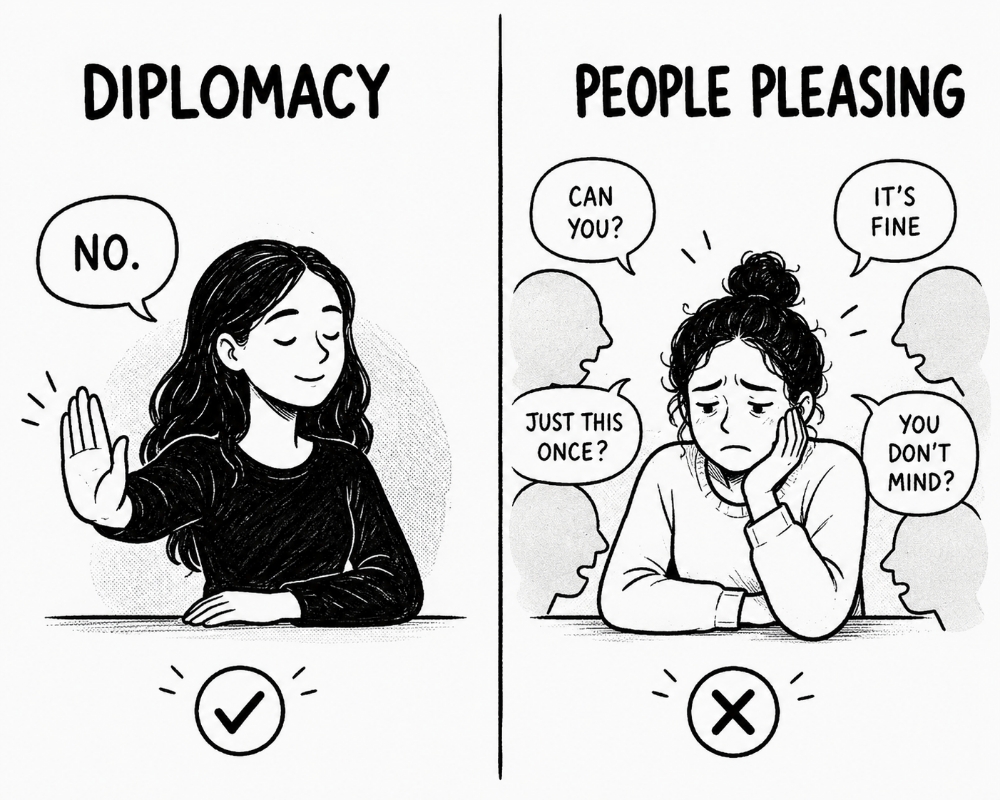
For such a tiny word, "no" carries enormous power. It is only two letters long, yet it has the remarkable ability to protect our time, preserve our energy, and occasionally disappoint someone who hoped you would help them move a sofa on a Saturday morning. Saying "no" may feel uncomfortable, but it is one of the most valuable life skills anyone can develop.
Many people struggle to refuse requests because they fear appearing rude, selfish, or unkind. As a result, they say "yes" to extra work, unwanted invitations, and responsibilities they simply cannot handle. Soon, their calendar looks like a game of Tetris where every block has landed in the worst possible place.
Learning to say "no" is not about rejecting people; it is about respecting your limits. Time and energy are limited resources. Every "yes" you give to one commitment is automatically a "no" to something else—perhaps your family, your health, your hobbies, or even the peaceful evening you desperately needed.
Setting healthy boundaries is a sign of maturity, not selfishness. People who consistently respect their own limits are often more reliable because they avoid making promises they cannot keep. Instead of agreeing to everything and delivering half-hearted results, they choose commitments they can honour with excellence.
Of course, saying "no" does not require dramatic speeches or disappearing into the wilderness. A polite response such as, "Thank you for thinking of me, but I can't commit to that right now," is often enough. Most reasonable people appreciate honesty more than reluctant agreement.
Humour can also soften difficult moments. Imagine accepting every favour ever requested. You might find yourself babysitting three energetic toddlers, attending four birthday parties, baking cupcakes, and assembling someone's "easy-to-build" wardrobe—all before lunchtime. At that point, even your coffee would start asking for a day off.
Ironically, saying "no" often earns greater respect. It demonstrates confidence, self-awareness, and the ability to prioritise what truly matters. People learn that when you say "yes," you genuinely mean it rather than agreeing out of guilt or pressure.
Like any skill, setting boundaries improves with practice. The first few refusals may feel awkward, but over time they become easier. Eventually, you discover that protecting your peace is not an act of selfishness—it is an act of wisdom.
In the end, life is too short to spend it pleasing everyone while neglecting yourself. A thoughtful "no" today can create space for a meaningful "yes" tomorrow. And remember, if someone asks you to help them move a piano up five flights of stairs, you now have permission to smile politely... and practise your newest life skill.