Qurbani, A Spiritual Duty and Its Economic Wisdom.

Qurbani is one of the most important practices observed by Muslims during Eid-ul-Adha. It commemorates the devotion and obedience of Prophet Ibrahim (AS), who was willing to sacrifice his beloved son in submission to Allah’s command. Before the sacrifice could happen, Allah replaced his son with an animal, teaching humanity the lesson of faith, sacrifice, and obedience. Today, Muslims around the world perform Qurbani by sacrificing animals such as goats, cows, sheep, and camels according to Islamic teachings.
At its core, Qurbani is a spiritual duty. It is not simply the slaughtering of an animal but a demonstration of sincerity, gratitude, and submission to Allah. The real purpose lies in the intention behind the act. The Quran explains that neither the flesh nor the blood reaches Allah, but rather the piety and devotion of the believer. Through Qurbani, Muslims learn to sacrifice personal desires, develop generosity, and strengthen their connection with God.
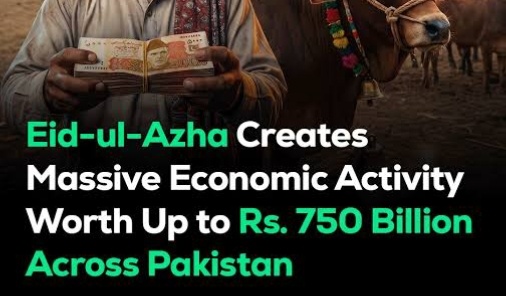
Besides its spiritual importance, Qurbani also has a major impact on the economy. Every year, millions of animals are bought and sold during the Eid season, creating enormous business activity. Farmers, livestock breeders, transport workers, animal feed sellers, butchers, traders, and temporary laborers all benefit financially. In many rural areas, people spend the entire year raising animals specifically for Eid-ul-Adha, making it an important source of income. This seasonal market boosts economic activity and supports livelihoods across different sectors.
One of the greatest economic lessons of Qurbani is the circulation of wealth. Islam discourages wealth from remaining concentrated in the hands of a few people. During Qurbani, financially stable Muslims spend money to purchase animals, and the meat is distributed among family, relatives, neighbors, and especially the poor. This creates a flow of resources from wealthier communities to less privileged ones. It is a practical model of economic balance where blessings are shared and no one is left hungry during Eid.
Closely related to this idea is the rotation of assets. Instead of keeping money idle or accumulating wealth without purpose, Muslims are encouraged to use their resources in meaningful ways. Purchasing animals for Qurbani stimulates markets and transfers economic benefits through different layers of society. The wealth moves from buyers to sellers, breeders, transporters, and workers, ensuring that money circulates rather than remains stagnant.
Qurbani also highlights the concept of rich-to-poor transmission. A large portion of sacrificial meat reaches underprivileged families who may not afford meat regularly. For many poor households, Eid-ul-Adha becomes a time of joy and nourishment. This act builds social harmony and reduces the gap between different economic classes. It strengthens empathy among people and reminds the wealthy of their social responsibility toward those in need.
A common question often arises in myind that if millions of animals are slaughtered every year during Eid-ul-Adha, why is there no shortage of animals? The answer lies in natural reproduction, proper livestock management, and economic demand. Farmers and breeders prepare in advance by raising large numbers of animals throughout the year. Since the demand for Qurbani is predictable and annual, livestock industries grow accordingly. Animals reproduce naturally, and responsible breeding ensures supply remains stable. In fact, the demand for Qurbani encourages people to invest more in livestock farming, increasing animal populations rather than reducing them.
There are many valuable lessons we can learn from the practice of Qurbani like ,
- First, it teaches obedience and trust in Allah.
- Second, it reminds us of the importance of sacrifice for a greater purpose.
- Third, it encourages generosity and compassion toward the poor.
- Fourth, it demonstrates the importance of economic circulation and fair wealth distribution.
- Finally, Qurbani teaches unity, gratitude, and social responsibility.
In conclusion, Qurbani is much more than a religious ritual. It is a powerful system that combines spirituality, charity, economic movement, and social justice. By understanding its deeper meaning, we realize that Qurbani is not only about sacrificing an animal but also about sacrificing selfishness, spreading kindness, and strengthening society as a whole.
Happy Eid from my side.
Cheers,
Amjad