The End of the "Airdrop Hunter" Era: Why I Pivoted to Value Investing in 2026

Remember 2024? We all lived in a state of endless, almost manic excitement. Every new testnet, every integration, every click of the "Claim" button seemed like a ticket to a life of ease. We spent hours checking transactions, endlessly grinding in Discord channels, calculating transaction volumes, and hoping that this specific project would give us those coveted $1,000, $5,000, or even $10,000 in tokens. It was an era of a "gold rush" where your wallet was the shovel and expectations were the gold. But let's be perfectly honest with ourselves: in 2026, this amusement ride finally turned into a pumpkin, and "airdrop hunting" became the pursuit of those who refuse to see the obvious changes.

The Reality We Didn't Want to Notice
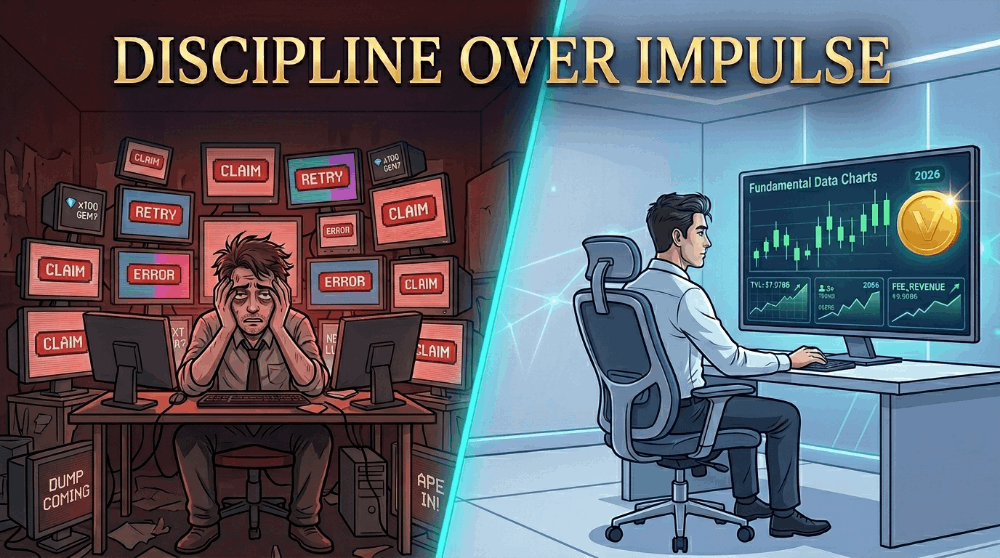
I was one of those who genuinely believed in the magic of "free money." I spent nights running a dozen wallets through the same protocol, counting every penny of gas fees. However, looking back from 2026, I see how catastrophically inefficient that time spent was. Projects changed the rules of the game, and they did it radically. The implementation of complex Sybil resistance algorithms based on transaction graph analysis, identity verification via social media, and even AI-driven behavioral pattern detection made "hunting" not just tedious, but economically unprofitable.
If you sit down and honestly calculate the cost of the time spent (at your hourly market rate), the network fees that, during periods of high activity, devoured the lion's share of potential profit, the time spent "warming up" wallets, and the risk of running into sophisticated phishing, which has become much more dangerous in the age of deepfakes, you will realize that your real income is trending toward zero, and often becomes negative. We were engaged in "crypto-volunteering," receiving nothing in return but promises that in 90% of cases ended either in a lack of tokens or their devaluation on the very first day of trading.
The problem is that "airdrop hunting" conditioned us to short-term thinking. We looked for the easy way out, ignoring fundamental metrics. We became hostages to hype, where success is measured not by product quality, not by the implementation of innovations, and not by the growth of a real economy within the blockchain, but by the number of retweets, mentions in feeds, and "activity" that was actually just padding. In an industry that was supposed to bring decentralization, transparency, and a new financial system to the world, we ourselves created a "farming" culture that drains protocol resources instead of helping them grow. We became parasites on the body of the ecosystem without meaning to, and this led to protocols starting to build walls against their own users.
Why the Old Model Collapsed
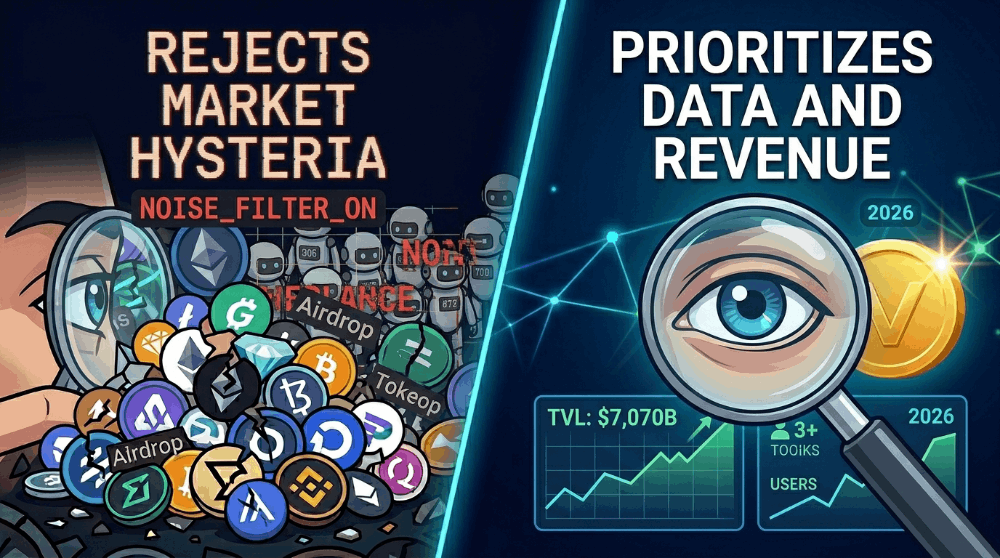
In 2026, the Web3 space has matured significantly, and this maturation was painful for those accustomed to easy gains. Projects no longer need "armies of bots" to create the illusion of activity for investors. Venture funds and large market participants have learned to filter out the noise. They need real users who will use the protocol for its intended purpose, who will pay fees for real actions, rather than just "swapping token for token." Reputation assessment systems have become so perfect that with any attempt to deceive a protocol or create multiple accounts, you only put a black mark on your main address.
I realized this clearly when, after a month of intensive, practically "full-time" work in one of the promising protocols, my wallet was marked as "undesirable" due to automated behavior patterns. This was my "moment of truth." I realized that I was spending my life, my time, and my nerves trying to outsmart an algorithm that will always be one step ahead. Whoever writes the algorithm will always defeat those trying to bypass it. This is a fundamental law of cryptography and software engineering.
My Pivot to Value-Based Investing
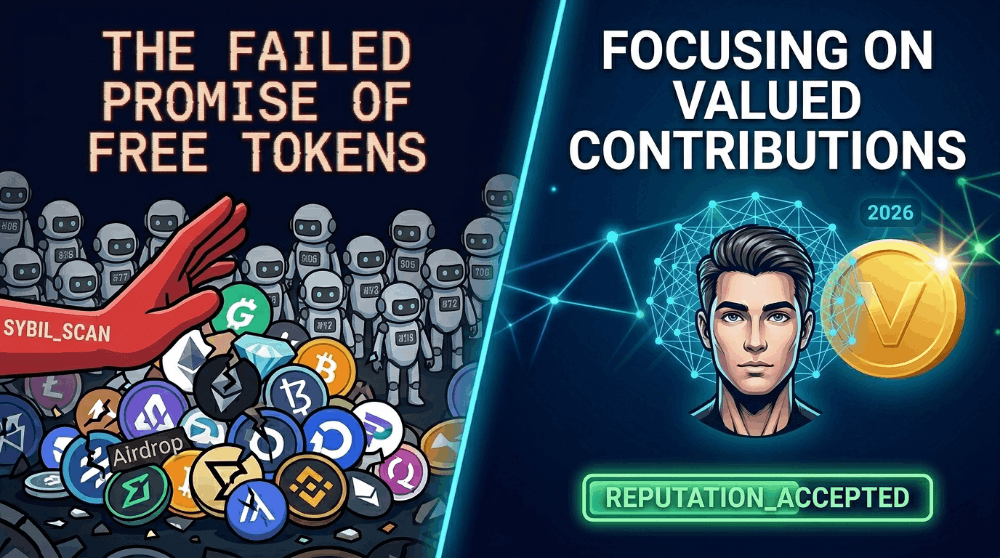
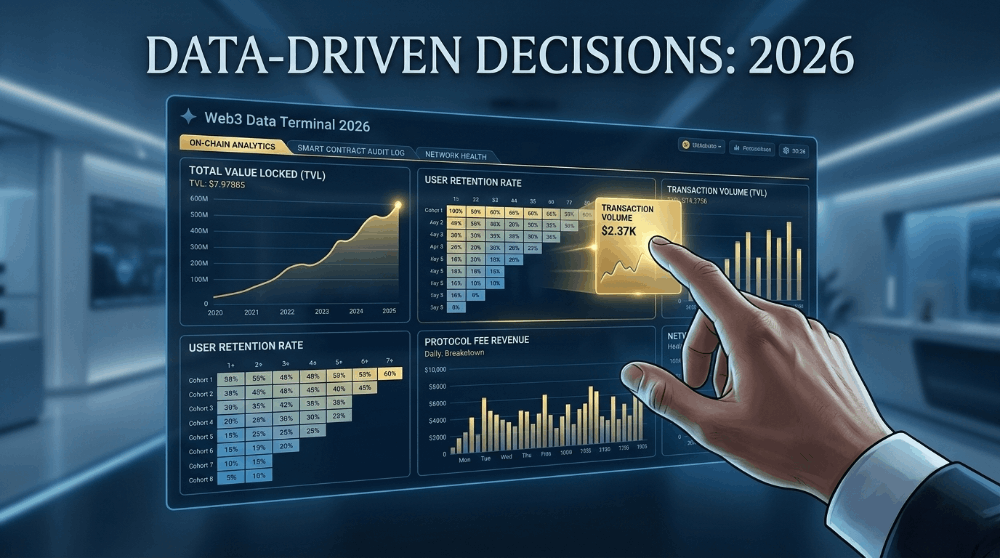
What do I do now that the scales have fallen from my eyes? I have shifted my focus. Instead of collecting "trinkets" that might be worth zero tomorrow, I have started studying metrics deeply. In 2026, Web3 investing is about working with real, tangible data. I no longer trust marketing articles or the words of founders on Twitter (in the age of deepfakes, words mean the least). I look at Total Value Locked (TVL)—how many real assets are locked in the system. I analyze protocol revenue—how much money it actually earned from fees from users who need this service. I study the number of active users (DAU/MAU) and their Retention Rate—whether they return, or if they are just one-time visitors.
If a project does not generate revenue or solve a real problem, whether it's liquidity, scalability, or decentralized data storage, it no longer enters my portfolio. Value investing gives me something no airdrop ever will: peace of mind and predictability. I no longer worry about whether an airdrop will come, whether there will be a "haircut" (Sybil airdrop filter), or whether my wallet will be banned. I profit from the growth of protocols that benefit the entire ecosystem. If a protocol is successful, its token grows along with its profitability. This is the path of long-term creation, not short-term consumption.
How I Choose Projects Today
My current filter for choosing a project is simple but effective, like a Swiss watch:
Code Transparency: If the code is closed or has not been audited by several independent teams, I don't even open their documentation.
Real Community: I go to Farcaster or other decentralized platforms and see: are people talking about the product, about its technical aspects, or are they only asking "when listing"? If the only interest is the listing, run away.
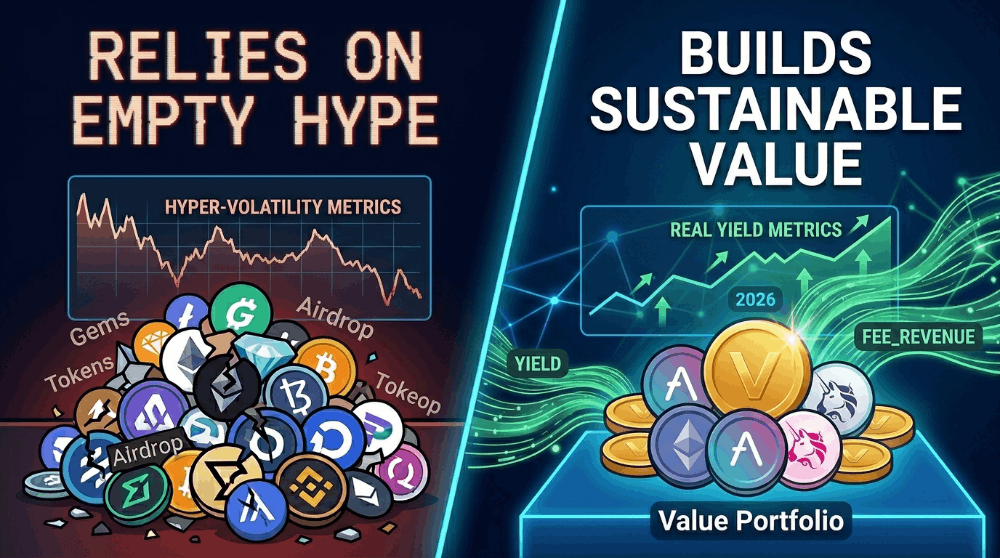
Sustainable Tokenomics: I check unlock schedules, token inflation, and burn mechanisms. In 2026, we see many "bubbles" bursting, and only those who focused on creating a sustainable product with a clear use case for the token remain afloat.
The Psychology of Refusing Easy Money
Transitioning to this strategy required me to fight my own ego. Easy money seems like something attainable, something you can "grab." Value investing requires patience, discipline, and the ability to wait. Many of us have lost the ability to wait because the crypto industry conditioned us to instant results. But look at markets with centuries of history: there are no "airdrops" there. There is capital, there is risk, there is asset valuation. We must treat blockchain projects not as lottery tickets, but as companies that are building a digital future.
If you look at the success stories of the largest crypto assets, you will see that their growth was dictated not by marketing giveaways, but by network effects and real utility for users. People used them not because they were paid to, but because they needed them. And that is exactly where the secret to the success of any serious project lies. Today, when choosing a project, I ask myself: "Would I pay for this service if there were no expectation of a token?" If the answer is "no," then that project is garbage. If "yes," then that is a foundation upon which to build the future.
The Role of Data and Analytics in 2026
The days when you could invest based on intuition or the advice of a "crypto-influencer" are gone forever. Today, your best friend is blockchain analytics. Using tools like Dune Analytics, Token Terminal, or decentralized indices gives you an advantage that is inaccessible to the crowd. The crowd buys on rumors; you buy on facts. When you see that a project increases its TVL by 5% daily for a month—that is a fact. When you see that the number of unique wallets performing active transactions is growing—that is a fact. When you see that the fees generated by the protocol cover its operating expenses—that is a fact.
Data does not lie. Influencers can be wrong, projects can build a "pretty wrapper," but the blockchain is a ledger that holds the truth. Every byte of data recorded to the chain is proof that something actually happened. And my strategy is now built on reading this truth, not on reading tweets. I have stopped being a lottery player and have become a data analyst. This has brought me far greater results than any "activities" in testnets.
The Future of Web3: From Chaos to Order
We are on the threshold of a new era. The industry is being purged of the superfluous, of everything that did not carry value. Only those who are building for the long term remain. And our task as investors is to support these builders with our capital and our attention. By investing in high-quality projects, we are voting for the future. We are voting for Web3 to become an integral part of the global economy, and not just a sandbox for speculators.
In closing, I want to ask you: how much time did you spend "hunting" in the last month? And how much of that time brought you real value that can be measured? It is time to admit that easy money is an illusion created so that someone else could profit from you. True value is created through deep immersion, analysis, and faith in technologies that are changing the world. Become investors in the future, not farmers in the past. This is the only path that leads to stable success in a world where information is becoming the most expensive asset. Start analyzing today so you won't regret it tomorrow.
I'd love to hear your thoughts: do you think the era of easy airdrops is over, or are we in for new, more sophisticated forms of "free" distribution? Share your thoughts in the comments.