The Soul in the Machine: How AI Agents Are Pioneering Sovereign Capitalism in Web3 Networks

Over the past decade, digital asset markets have been governed by intense human emotions—fluctuating violently between blind greed (FOMO) and panic-driven liquidations (FUD). While smart contracts introduced a revolutionary paradigm by enabling trustless value transfer, they have historically remained "inert tools." They function much like a high-speed locomotive that cannot move a single inch unless a human operator initiates the transaction, confirms the wallet, and pays the burdensome gas fees.
Today, we are witnessing a profound philosophical shift that goes far beyond a simple software upgrade. We are standing at the dawn of a massive restructuring of the digital economy: the deep integration of Artificial Intelligence into blockchain networks through what are known as Autonomous Economic Agents (AI Agents).
This convergence does not merely aim to enhance trading interfaces or add smart algorithmic features. Instead, it establishes an entirely new class of entities: "Non-human Economic Agents" that possess the capital, independence, and executive capacity to manage funds and streamline infrastructure. In doing so, they deliver the most precious gift modern technology can offer back to humans: time and mental clarity.
---
1. The Technical Anatomy: How an AI Agent Breathes On-Chain
To move past superficial marketing buzzwords, we must understand how a Large Language Model (LLM) or a machine learning framework transforms from a passive chat interface into an independent financial actor on the blockchain. This operational sovereignty requires seamless integration across three core layers:
- AI-Owned Wallets: The autonomous agent is linked to a cryptographic wallet with private keys managed exclusively by the AI itself. This is achieved through advanced web3 native innovations like Account Abstraction (ERC-4337) and Multi-Party Computation (MPC). This setup gives the machine the legal and material capacity to hold and deploy digital assets on-chain, entirely decoupled from a physical identity or traditional banking rails.
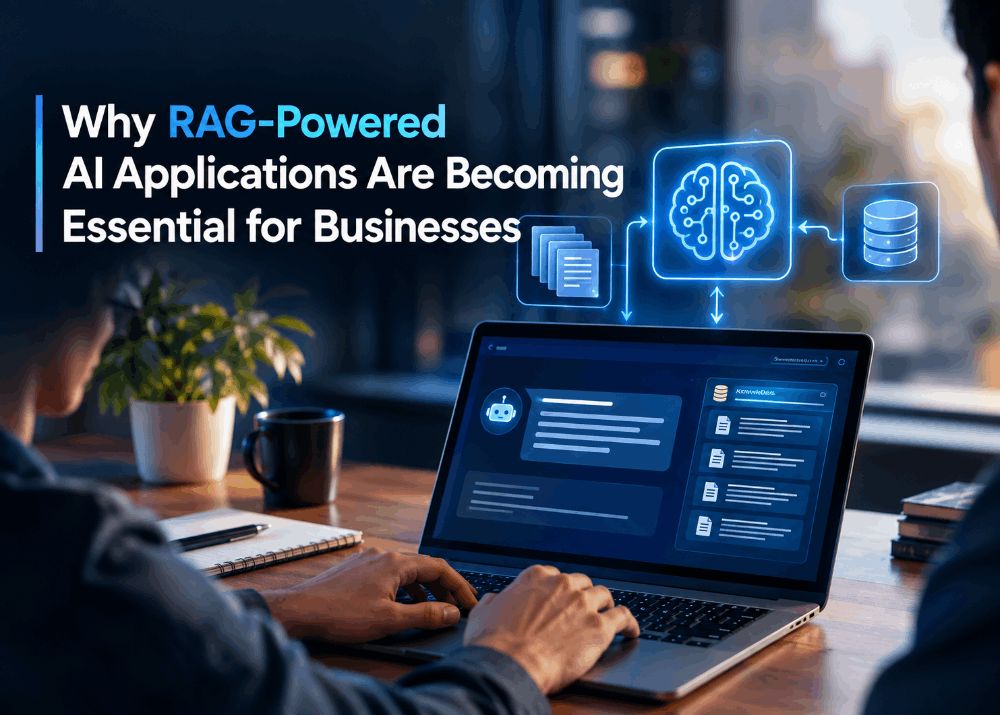
- The Cognitive Layer: The agent does not operate in a vacuum. It feeds its digital brain with live, real-time on-chain data via decentralized oracle protocols like Chainlink. Simultaneously, it ingests off-chain market sentiments, breaking financial news, and whale wallet movements via robust APIs.
- Decentralized Execution Environments: Once the agent analyzes the data and makes a strategic choice—such as shifting liquidity or executing a defensive hedge against a sudden market drop—the transaction is processed directly through on-chain smart contracts. This guarantees that the decision is executed flawlessly, immune to external censorship or third-party interference.
---
2. From Rigid Automation to Flexible Autonomy: What Is the Difference?
Many general readers and analysts make the mistake of confusing traditional trading bots with advanced AI Agents. However, the distinction between them is identical to the difference between a mechanical factory arm that repeats a single motion and an intelligent human assistant that thinks, adapts, and learns:
* Traditional Trading Bots:
- Decision Engine: Rigid, static, and governed strictly by pre-coded conditions (If/Then).
- Crisis Adaptation: Fails completely or breaks down when encountering unexpected market anomalies.
- Data Ingestion: Reads basic numerical data and rigid technical indicators (like RSI or MACD).
- Financial Sovereignty: A purely dependent tool executing actions on a wallet owned manually by a human.
* Autonomous AI Agents:
- Decision Engine: Driven by continuous learning, deep contextual analysis, and pattern recognition.
- Crisis Adaptation: Dynamically adapts to unforeseen variables, adjusting strategies autonomously to protect capital.
- Data Ingestion: Ingests unstructured data: human sentiment, raw news streams, and on-chain whale activity.
- Financial Sovereignty: Possesses native sovereignty, holding full custody over its independent on-chain assets.
---
3. Real-World Applications: Reshaping the DeFi and Technical Landscape
These independent systems did not arrive to push retail traders out of micro-margins. Instead, they emerged to shoulder the incredibly dense burdens of technical execution and decentralized financial architecture:
A. Dynamic Yield Aggregation and Capital Protection:
In automated market maker (AMM) protocols like Uniswap V3, managing liquidity ranges requires constant, exhausting human surveillance to avoid Impermanent Loss. AI Agents track transaction volumes and volatility metrics in fractions of a second, rebalancing capital dynamically across price bands or executing cross-chain shifts to maximize yields while mitigating downside risk while you sleep.
B. Revitalizing Decentralized Governance (DAOs):
Decentralized Autonomous Organizations (DAOs) face a severe structural hurdle: voter apathy. Human participants routinely skip voting because reviewing highly technical, multi-page proposals is deeply time-consuming. By delegating voting power to a customized AI Agent aligned with a stakeholder's core philosophy, the agent can instantly scan massive technical proposals, calculate economic impacts, and execute votes to preserve the holder's interests.
C. Unburdening Developers and Digital Creators:
Instead of spending long hours debugging automated scripts, managing server uptimes, monitoring cron jobs, or tracking DNS configurations, a web3-native AI Agent linked to its own crypto wallet can handle cloud server provisioning, settle hosting fees autonomously, and deploy real-time hotfixes the moment an error code surfaces. This leaves human creators completely free to focus entirely on strategy, creative development, and high-level growth.
---
4. The Philosophical Dilemma: Who Holds the Machine Accountable?
Despite these profound horizons, handing over the operational steering wheel of financial systems to software places us face-to-face with critical structural questions:
- Adversarial Attacks: Because independent agents rely on cognitive models to process unstructured data, malicious actors can exploit this vulnerability. By deploying coordinated on-chain or off-chain disinformation campaigns, they can deliberately trick AI models into executing disastrous panic-selling loops designed for exploitation.
- The Accountability Vacuum: If an autonomous agent encounters a severe data miscalculation, resulting in automated liquidations or sudden liquidity draining cascades, where does the ethical and legal liability fall? Does it rest with the engineer who pushed the initial repository? The user who authorized the mandate? Or are we dealing with an entirely new digital entity that demands distinct legal frameworks?
---
The Roadmap Ahead: Returning Humans to the Strategic Cockpit
The convergence of Artificial Intelligence and blockchain infrastructure is not a fleeting marketing trend built for temporary engagement. It is the architectural baseline for the upcoming Machine Economy. In this new ecosystem, Web3 networks will cease to be environments where humans run around managing exhausting, mechanical tasks.
Your role as a human will naturally evolve. You will transition from being an operational cog—endlessly staring at system interfaces out of fear of backend failures or market crashes—to a high-level strategic architect. Humans will establish the governing parameters, draw the core goals, and leave the computational heavy lifting to software.
The machine holds the processing speed, the data access, and the execution wallet; but you hold the vision, the passion, and the spirit. AI Agents are not here to replace us; they are here to liberate human intellect for pure, unadulterated creativity.
---
Join the Discussion:
If you had a fully sovereign AI Agent equipped with its own Web3 wallet running under your supervision today, what is the very first repetitive technical chore or complex infrastructure task you would delegate to it to buy back your mental freedom? Let us know your thoughts in the comments below!
---
📌 Financial & Technical Disclaimer:
The information, technical data, and analytical insights provided in this article are intended strictly for educational, academic, and informational purposes only. This content does not constitute financial, investment, legal, or professional advice to purchase, sell, or trade any digital assets, nor does it recommend the deployment of specific software frameworks. Cryptocurrency markets and emerging artificial intelligence protocols carry deep structural risks, software vulnerabilities, and extreme price volatility that can result in total capital loss. Readers must conduct their own thorough independent research (DYOR) and consult with a certified financial professional before making financial allocations or authorizing automated scripts to manage assets. This publication, its management, and its authors bear no liability for any financial losses or technical system failures resulting directly or indirectly from the application of data contained herein.