The Irkutsk Plague Scare: What We Know, and How AI Could Help Close the Gap

A young laboratory worker's death in Siberia has set off a week of rumor, quarantine and diplomatic questions. Whether or not plague was involved, the episode shows how much depends on one thing in an outbreak: trustworthy, verifiable information, shared quickly. It also shows where artificial intelligence can help, and where it cannot.
What happened
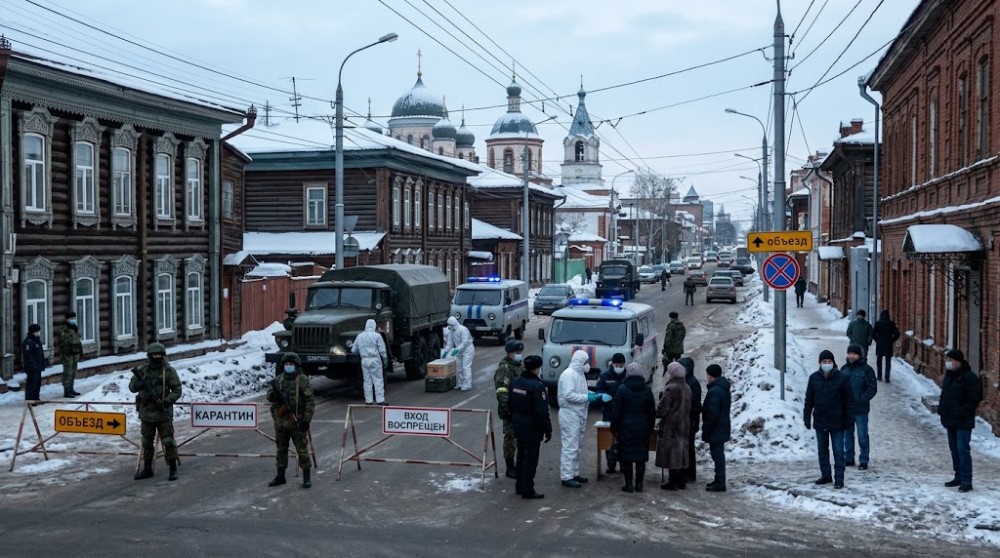
Darya Shipilova, 28, worked at the Irkutsk Anti-Plague Research Institute of Siberia and the Far East. She was hospitalized in Shelekhov, a town near Irkutsk, with severe pneumonia, and died on October 1 or 2 after being placed on a ventilator. The Shelekhov District Hospital's inpatient department was put under quarantine, and Anna Popova, head of Russia's health watchdog Rospotrebnadzor, flew to the region for an emergency meeting of the regional sanitary and anti-epidemic commission.
From there the accounts diverge.
• Local and independent media, citing unnamed sources, reported pneumonic plague, the lung form of the disease caused by the bacterium Yersinia pestis. Some reports said she broke a test tube containing the pathogen; others linked her illness to a work trip. These claims are unverified, and the trip accounts conflict.
• Russian officials have been inconsistent in tone. The Buryatia governor first said she died of plague, then edited his post to say "possibly." A Baikalsk post warning residents against traveling to Shelekhov was deleted within hours. Rospotrebnadzor's formal position is that she died of "pneumonia of unknown etiology," that testing found no microorganisms linked to her work, and that no lab accident was detected.
• Contacts: Roughly 200 people were reported to be under medical observation, with about 189 hospitalized, according to media reports citing sources. The regional governor said early on that contacts showed no symptoms and that test results were negative.
On October 6, Russia told the World Health Organization that no plague had been found in the worker or among her contacts, with about 60% of the identified group tested so far. The WHO has said no cause of death has been officially confirmed, has offered support, and has asked Russia to identify the pneumonia-causing pathogen. The US and the European Commission say they are monitoring the situation.
It is worth stating plainly what is not established: there is no official confirmation that plague caused the death, and no confirmed additional cases.
Why plague raises alarm
Plague is treatable with antibiotics if caught early, but untreated pneumonic plague is very dangerous. The WHO describes it as of particular concern because of its potential to trigger epidemics. It spreads through close contact with an infected person, so it is far less transmissible than COVID-19, which is why quarantining and following contacts can work well.
Context matters too. Natural plague foci persist in wild rodent populations across Siberia and Mongolia. Russian and Mongolian scientists reported high activity in the Saylyugem focus on their border this year, though they described the strains as having relatively low epidemic potential. Nothing publicly links that activity to this death. Russia's last confirmed human case was in 2016.
The real problem: an information gap
The central difficulty is structural. Rospotrebnadzor runs the network of anti-plague institutes, including the one where Shipilova worked, and is also the agency investigating her death and issuing official statements about it. Its model descends from the Soviet sanitary-epidemiological system, which is good at fast, centralized quarantine but has a history of controlling information about lab accidents. The 1979 Sverdlovsk anthrax leak, blamed for years on contaminated meat, is the best-known example.
That history does not prove anything about Irkutsk. But it explains why independent experts and the WHO want the specific pathogen named and the evidence shared. Without that, the public is left choosing between official statements and anonymous-source reporting, and neither can be fully checked.
How AI can help prevent and detect outbreaks
AI is already used in public health, mostly as a force multiplier for human experts.
• Early warning. Systems scan news and social media in many languages to flag unusual disease reports. The WHO's own monitoring picked up the Irkutsk reports from media on October 2. BlueDot flagged the Wuhan cluster in late December 2019 this way.
• Forecasting. Models combine case counts, mobility, climate and travel data to project spread and guide where to place supplies and staff.
• Diagnostics. AI can support imaging reads, lab pattern recognition and rapid pathogen identification from sequencing data.
• Genomic surveillance. Machine learning helps compare strains, trace links between cases and spot mutations.
• Contact tracing and triage. Network analysis can prioritize who to test or follow up among hundreds of contacts.
• Zoonotic monitoring. For plague, models that combine climate, rodent and flea surveys and past epizootics can improve forecasts of risk in natural foci.
• Lab biosafety. Automated incident logging and monitoring can help reduce accidents at high-containment facilities.
These tools have real limits. They depend on the quality of the data they receive, they produce false alarms from rumors, forecasts for novel outbreaks have often been unreliable, and tracking tools raise privacy concerns. AI cannot replace lab confirmation, clinical care or fieldwork.
Identifying the pathogen: where AI is most useful here
The most valuable contribution in a case like this is on the identification question. If the pathogen were sequenced, AI-assisted genomic analysis could compare it against known Yersinia pestis strains, including reference collections and strains from natural foci in Siberia, Mongolia and Altai. That could help distinguish a natural infection from a laboratory source, and confirm or rule out plague itself. It could also test other explanations for the pneumonia, since a severe case can have many causes.
AI can speed this comparison and make it more rigorous. But it needs input data, and that is where the gap sits.
How AI can help close the gap
The barrier is trust and access, not technology. AI cannot analyze results that are never released. Still, it can help build the conditions for verification.
Shared genomic data. Publishing the sequence to the WHO or independent labs would let outside teams run the same comparisons and reach their own conclusions. Open pathogen databases already allow this at scale.
Transparent, auditable reporting. Publishing testing numbers, contact counts and outcomes in a regular, machine-readable format would let analysts model the situation independently and spot inconsistencies.
Independent open-source monitoring. Multilingual scanning of regional media can help outside agencies track claims against official statements, provided humans verify what the tools flag.
Verification, not just detection. AI can help triage rumors, trace where a claim originated and flag deleted posts, so that unverified reports are not mistaken for facts in either direction.
Biosafety oversight. Standardized, independently reviewable incident reporting from high-containment labs would address the specific question of lab accidents, which no country can credibly answer by internal assurance alone.
Privacy safeguards. Any monitoring of people, such as contact tracing, should have clear limits and oversight, because tools that erode trust make outbreaks harder to manage.
What to watch next
• Whether Russia names the pathogen and shares sequence data or samples with outside labs.
• Any further statements from the WHO under the International Health Regulations process.
• Whether any independent inquiry, separate from Rospotrebnadzor, examines the death.
• Whether additional cases appear among contacts or in the region.
Conclusion
The Irkutsk case is unresolved, and it would be a mistake to treat either the plague claims or the official reassurances as settled. What it does show clearly is that outbreak control depends on information that others can check. AI offers faster detection, sharper analysis and better forecasting, but its value is capped by the openness of the data fed into it. The tools to identify the pathogen exist. What remains is the willingness to share what is needed to use them.