💰 Who Really Profits from Web3: The Community… or Early Insiders?

👀 Introduction
Web3 promises something revolutionary.
A new internet where:
- Users own their data
- Communities control platforms
- Creators earn directly from their work
- Power is decentralized
The narrative is powerful.
Instead of corporations capturing all the value, Web3 claims to redistribute wealth to the community.
But a growing question is emerging:
💭 Who actually profits from Web3?
Is it the global community of users…
or the early insiders who arrived first?
To understand the truth, we need to look deeper into how Web3 ecosystems really work.
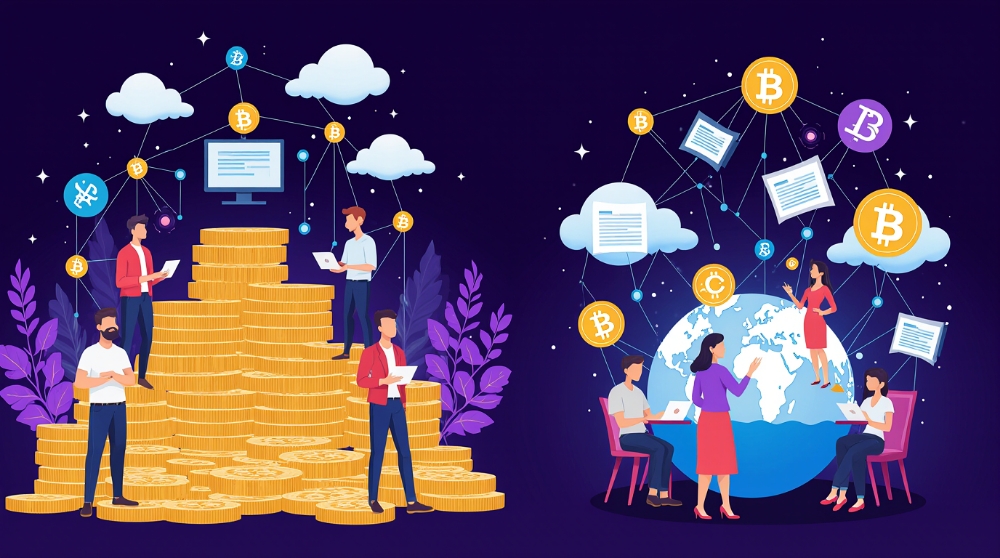
🌐 The Promise of Community Ownership
One of the most attractive ideas behind Web3 is community ownership.
Unlike traditional Web2 platforms, where companies control everything, Web3 introduces systems where users can participate economically.
For example:
- Token holders can vote on governance decisions
- Community members can earn rewards
- Creators can monetize directly through blockchain tools
In theory, this means that value flows back to the people who contribute.
Developers build.
Users participate.
Communities grow.
Everyone shares the rewards.
At least… that’s the vision.
🚀 The Advantage of Being Early
In reality, early participants often receive the biggest advantages.
This happens for several reasons.
First, many Web3 projects distribute tokens during early stages through:
- Private sales
- Seed funding rounds
- Early community incentives
These early allocations can represent a large percentage of the total token supply.
When a project becomes successful later, those tokens may increase dramatically in value.
Someone who invested early might see huge profits.
Meanwhile, new users joining later often buy tokens at higher prices.
This dynamic creates a familiar pattern.
Early adopters benefit the most.
🏦 Venture Capital in Web3
Another major factor is venture capital investment.
Despite the decentralization narrative, many Web3 projects receive funding from large investment firms.
These firms invest millions of dollars during the earliest stages.
In exchange, they often receive:
- Significant token allocations
- Strategic influence
- Early access to project growth
When the project launches publicly, the value of those tokens may multiply.
This means that institutional investors can profit heavily.
So while Web3 talks about decentralization, capital still plays a powerful role.
📈 Token Distribution Shapes Everything
Token distribution is one of the most important elements of any Web3 project.
How tokens are allocated determines who benefits the most.
A typical Web3 token allocation might include:
- Founders and developers
- Early investors
- Community incentives
- Ecosystem development funds
If a large portion goes to insiders, the system can become imbalanced.
Even if the project is technically decentralized, economic power may still remain concentrated.
The community participates — but insiders may control a larger share of the value.
🧑🤝🧑 Communities Still Create Real Value
Despite these concerns, communities remain essential to Web3.
Without active users, no project can survive.
Communities provide:
- Content
- Adoption
- Feedback
- Promotion
- Network growth
Many Web3 ecosystems reward these contributions through mechanisms like:
- staking rewards
- community grants
- governance participation
- creator incentives
Some users earn real income through these systems.
Especially in emerging markets, Web3 opportunities can be meaningful.
But the scale of these rewards often differs from the profits of early insiders.
🌍 A Global Opportunity
One reason Web3 remains attractive is its global accessibility.
Unlike traditional financial systems, Web3 allows people from almost anywhere to participate.
All you need is:
- an internet connection
- a crypto wallet
- basic knowledge of blockchain tools
This has created opportunities for people in regions that previously had limited access to global markets.
Creators, developers, and writers can now participate in digital economies.
Even if insiders profit significantly, Web3 still opens doors that didn’t exist before.
⚖️ The Debate: Fair System or Familiar Pattern?
Critics argue that Web3 sometimes replicates the same inequalities found in traditional systems.
They point to issues such as:
- large insider allocations
- token price speculation
- governance dominated by large holders
In many decentralized organizations, voting power depends on the number of tokens someone owns.
This means wealth can translate into influence.
Supporters respond that Web3 is still evolving.
Many projects are experimenting with new governance models designed to improve fairness.
For example:
- quadratic voting
- reputation-based systems
- community funding programs
The goal is to ensure that participation matters — not just capital.
🔍 Transparency Changes the Game
One major difference between Web3 and traditional systems is transparency.
Blockchain technology makes many financial activities publicly visible.
Token allocations, transactions, and wallet balances can often be tracked on-chain.
This transparency allows communities to analyze:
- how tokens are distributed
- who controls large portions of supply
- how funds are used
While this doesn’t automatically solve inequality, it gives communities information that is rarely available in traditional finance.
Transparency can empower users to hold projects accountable.
🔮 The Future of Web3 Profit Distribution
As Web3 continues to grow, the question of profit distribution will remain central.
Projects that succeed long term may be the ones that balance:
- incentives for builders
- rewards for early supporters
- fair participation for the broader community
If too much value flows only to insiders, trust may weaken.
But if communities feel genuinely empowered, Web3 could evolve into something far more inclusive.
The ecosystem is still young.
Many of its economic models are being tested in real time.
✨ Final Thoughts
So who really profits from Web3?
The honest answer is:
👉 Both the community and early insiders — but often in very different ways.
Early participants frequently capture the largest financial gains.
However, communities still play a crucial role in creating the value that makes those gains possible.
Web3 sits somewhere between idealism and reality.
It promises decentralization, but it also operates within economic incentives.
The real challenge for the future will be finding ways to distribute opportunity more fairly — while still encouraging innovation and growth.
Because the success of Web3 ultimately depends on one thing:
A community that believes the system works for them.
💬 What Do You Think?
Do you believe Web3 truly benefits the community…
or mostly rewards early insiders?
Share your thoughts 👇