How Can Tokenization Help Small and Mid-Sized Developers Compete for Institutional Capital?

Small and mid-sized real estate developers often face a significant challenge when competing for institutional capital. Large developers typically have established track records, extensive property portfolios, stronger banking relationships, and greater access to institutional investors. Smaller firms, despite having attractive projects and strong local market knowledge, may struggle to meet the scale, transparency, and reporting expectations of institutional capital providers.
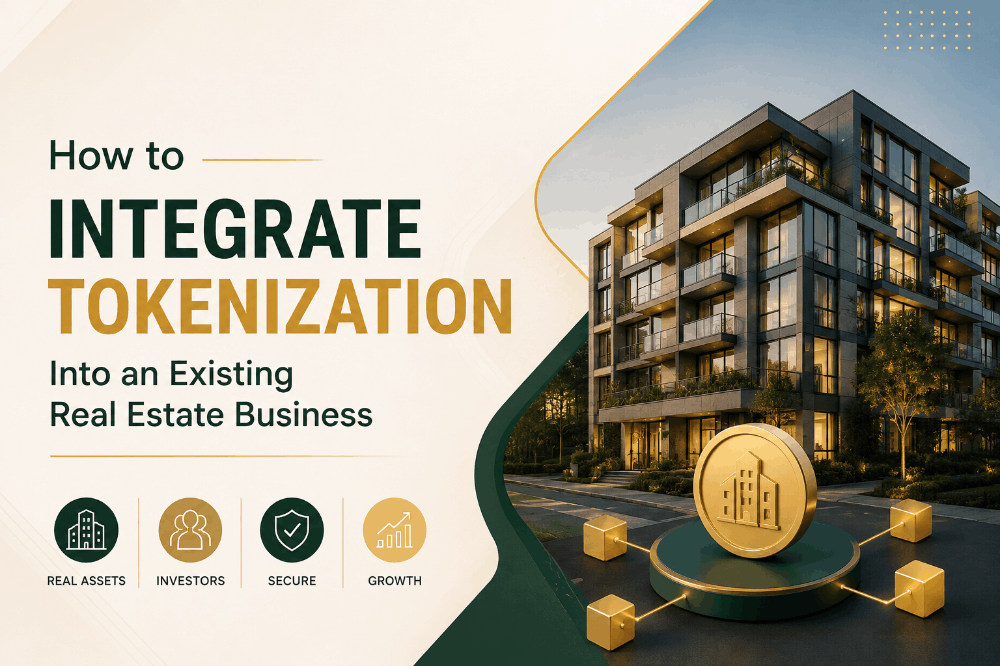
Real estate tokenization introduces a new approach to this challenge. By converting legally structured interests in real estate assets into blockchain-based digital tokens, developers can create more transparent, fractional, and digitally managed investment opportunities.
Tokenization does not automatically guarantee institutional funding. However, when combined with strong governance, compliance, financial reporting, and professional asset management, it can help smaller developers build investment structures that are more compatible with modern institutional capital requirements.
What Is Real Estate Tokenization?
Real estate tokenization is the process of representing ownership interests or economic rights associated with a property through blockchain-based digital tokens.
A developer can potentially tokenize:
- Residential developments
- Commercial properties
- Office buildings
- Warehouses
- Hospitality projects
- Land
- Rental portfolios
- Development projects
The legal structure determines what each token represents. Tokens may provide fractional interests in a property-owning entity, defined revenue rights, debt interests, or other legally established economic rights. Blockchain technology provides the digital infrastructure for recording ownership, transfers, and transactions.
Why Small and Mid-Sized Developers Struggle to Attract Institutional Capital
Limited Track Records
Institutional investors often evaluate a developer's previous projects, financial performance, governance structure, and execution capabilities before committing capital.
Smaller Deal Sizes
Large institutions may prioritize investment opportunities capable of deploying substantial amounts of capital efficiently.
Limited Reporting Infrastructure
Institutional investors typically expect detailed financial statements, asset-level reporting, investor communications, and ongoing performance data.
Fragmented Ownership Structures
Traditional property transactions can involve multiple legal entities, documents, intermediaries, and manual processes.
Limited Investor Visibility
Smaller developers may not have extensive relationships with institutional funds, family offices, asset managers, and other large capital providers. Tokenization can help address some of these structural challenges by creating a more standardized digital investment environment.
How Tokenization Can Help Developers Become More Institution-Friendly
1. Creates More Structured Investment Opportunities
Instead of presenting an institution with a conventional property purchase, developers can create a clearly defined investment structure around a specific asset or portfolio.
The structure can specify:
- Investment size
- Ownership percentage
- Revenue rights
- Distribution mechanisms
- Exit conditions
- Transfer restrictions
- Governance rights
This makes the investment proposition easier to analyze and compare.
2. Enables Fractional Capital Formation
Tokenization allows a real estate asset to be divided into smaller digital investment units.
A developer does not necessarily have to rely on a single investor to provide the entire capital requirement. Multiple investors can participate through an appropriately structured offering.
For institutional investors, this can also create opportunities to acquire a defined allocation within a larger investment structure.
3. Improves Transparency
Institutional investors place considerable importance on reliable data and reporting.
A tokenization platform can provide a transparent record of:
- Token ownership
- Transaction activity
- Capital contributions
- Distributions
- Asset information
- Investor activity
When blockchain records are combined with audited financial and property data, developers can provide investors with greater visibility throughout the investment lifecycle.
4. Strengthens Digital Investor Reporting
Small developers may lack the sophisticated investor-management infrastructure of larger real estate firms.
A tokenization platform can centralize investor information through digital dashboards.
Investors can potentially monitor:
- Portfolio holdings
- Property performance
- Distribution history
- Transaction records
- Investment documents
This creates a more professional investor experience.
5. Supports Automated Distribution
Smart contracts can automate predefined financial processes.
For eligible structures, they can help manage:
- Income distributions
- Token transfers
- Redemption procedures
- Ownership updates
- Compliance restrictions
Automation can reduce administrative workloads and improve consistency.
Tokenization Can Help Developers Build a Stronger Capital Story
Institutional investors are not simply looking for blockchain-based assets. They are looking for credible investments supported by strong fundamentals.
A developer seeking institutional capital should therefore use tokenization as part of a broader investment strategy.
The investment proposition should clearly communicate:
Asset quality + financial performance + legal structure + governance + technology + compliance + exit strategy
Tokenization strengthens the technology and operational components, but it cannot replace strong real estate fundamentals.
Using Tokenization to Create Institutional-Grade Investment Structures
Property-Level Tokenization
A developer can create a tokenized structure around an individual property.
This may be suitable for:
- Commercial buildings
- Multifamily developments
- Hotels
- Industrial properties
Portfolio Tokenization
Several properties can potentially be combined into a portfolio structure.
This allows investors to gain diversified exposure rather than investing in a single asset.
Development Project Tokenization
Developers can structure investment opportunities around qualifying development projects and define how capital will be deployed throughout construction and completion.
Income-Producing Asset Tokenization
Existing rental properties can potentially be structured around recurring income streams, providing investors with exposure to property-generated cash flows.
Improving Institutional Due Diligence With Tokenization
Institutional investors conduct extensive due diligence before committing capital.
Tokenization platforms can organize important information digitally, including:
- Property ownership documents
- Valuation reports
- Financial statements
- Lease information
- Investment agreements
- Compliance records
- Transaction history
A centralized digital infrastructure can make information easier to access and manage.
However, blockchain records should complement—not replace—traditional legal documentation, independent valuation, financial audits, and due diligence.
How Tokenization Can Reduce Capital Concentration Risk
A small developer that depends on one lender or one private investor can face significant financing risk. Tokenization can create a more diversified capital structure by enabling participation from multiple eligible investors. This can potentially reduce dependence on a single source of funding and give developers greater flexibility when structuring project finance.
Key Benefits for Small and Mid-Sized Developers
Broader Capital Access
Developers can potentially reach a larger network of eligible investors through digital investment platforms.
Lower Investment Barriers
Fractional structures can make certain real estate opportunities accessible to investors who may not want to purchase an entire property.
Better Transparency
Blockchain-based records can improve visibility into ownership and transaction activity.
More Efficient Administration
Smart contracts and automated workflows can reduce repetitive operational tasks.
Stronger Investor Experience
Digital dashboards, automated reporting, and transparent transaction records can create a more sophisticated investment environment.
Flexible Capital Structures
Developers can explore combinations of equity, debt, revenue-sharing, and other investment structures depending on applicable regulations.
What Institutional Investors Still Expect
Tokenization alone will not make a developer attractive to institutional capital.
Institutional investors will still evaluate:
- Developer experience
- Property fundamentals
- Market conditions
- Financial performance
- Risk-adjusted returns
- Legal structure
- Governance
- Compliance
- Asset valuation
- Exit strategy
- Management capabilities
Therefore, developers should treat tokenization as an infrastructure layer that strengthens an existing investment proposition.
Compliance Is Critical
Many tokenized real estate investments can involve securities or other regulated financial interests, depending on their structure and jurisdiction.
Developers should establish:
- KYC procedures
- AML screening
- Investor eligibility requirements
- Transfer restrictions
- Regulatory reporting
- Custody arrangements
- Legal documentation
Professional legal and financial advisors should be involved before tokens are issued or marketed to investors.
Building an Institutional-Ready Tokenization Platform
A developer targeting institutional capital should consider a platform with:
Smart Contract Infrastructure
Secure contracts for issuance, transfers, distributions, and compliance rules.
Investor Management
Tools for onboarding, verification, documentation, and portfolio tracking.
Institutional Reporting
Detailed reporting for investment performance, ownership, distributions, and asset information.
Compliance Integration
KYC, AML, sanctions screening, and investor eligibility functionality.
Secure Custody
Institutional-grade wallet and asset custody infrastructure.
API Integration
Connections with accounting, property management, ERP, banking, and financial systems.
Challenges Developers Must Address
Technology Costs
Building a sophisticated tokenization ecosystem requires investment in blockchain infrastructure, cybersecurity, smart contracts, and integrations.
Regulatory Complexity
Requirements differ across jurisdictions and asset structures.
Institutional Adoption
Large investors may require extensive due diligence before adopting tokenized investment structures.
Liquidity Expectations
Tokenization does not automatically create a secondary market. Liquidity depends on investor demand, market infrastructure, and regulatory permissions.
Market Education
Developers must clearly explain how the token relates to the underlying asset and what rights investors receive.
A Practical Strategy for Smaller Developers
Small and mid-sized developers do not necessarily need to tokenize an entire portfolio immediately.
A more practical approach can involve:
Step 1: Select a suitable asset
Choose a property with strong fundamentals, clear ownership, and reliable financial information.
Step 2: Establish the legal structure
Determine exactly what the token represents and what rights investors receive.
Step 3: Conduct asset due diligence
Complete valuation, title verification, financial analysis, and risk assessment.
Step 4: Define the target investor
Determine whether the offering is designed for institutional investors, qualified investors, family offices, or another eligible audience.
Step 5: Build the compliance framework
Implement investor verification, transfer controls, reporting, and regulatory requirements.
Step 6: Develop the tokenization infrastructure
Deploy smart contracts, investor management systems, wallets, dashboards, and reporting tools.
Step 7: Build institutional relationships
Use the tokenized structure as part of a broader capital-raising strategy supported by professional financial and legal documentation.
The Future of Institutional Capital and Real Estate Tokenization
As digital asset infrastructure becomes more mature, institutional investors may increasingly explore tokenized real-world assets as part of their portfolios. This could create opportunities for smaller developers to compete on factors beyond company size.
A developer with a strong property, transparent financial structure, professional governance, and institutional-grade digital infrastructure may be able to present investment opportunities in a format that aligns more closely with modern capital markets. The competitive advantage will not come from blockchain alone. It will come from combining technology with investment quality and institutional standards.
Conclusion
Tokenization can give small and mid-sized developers a new mechanism for presenting real estate investment opportunities to institutional capital. By enabling fractional structures, transparent ownership records, automated processes, digital reporting, and flexible investment models, it can help smaller developers build more sophisticated capital-raising frameworks. However, institutional investors will continue to prioritize fundamentals, governance, compliance, risk management, and returns. For this reason, the strongest strategy is to position tokenization as an institutional-grade infrastructure layer not a substitute for strong real estate fundamentals. When technology, legal structure, financial discipline, and asset quality work together, tokenization can help smaller developers compete more effectively for capital in an increasingly digital real estate market.