The Exit Scam Hidden in Plain Sight: How to Spot Rug Pulls in Crypto

Not Every Crypto Project Is Meant to Succeed
Some crypto projects fail because of poor execution. Others are designed to fail from the very beginning.
These scams—known as rug pulls—have drained billions of dollars from investors by exploiting one powerful belief: getting in early means getting rich.
A new token launches. Social media fills with excitement. Influencers promote it. The price rises rapidly. More people buy in, convinced they're witnessing the next big opportunity.
Then everything changes.
Liquidity disappears. Developers stop communicating. Trading collapses. Investors are left holding tokens that are worth little—or nothing.
Understanding how rug pulls work can help you recognize the warning signs before you become the exit liquidity.
What Is a Rug Pull?
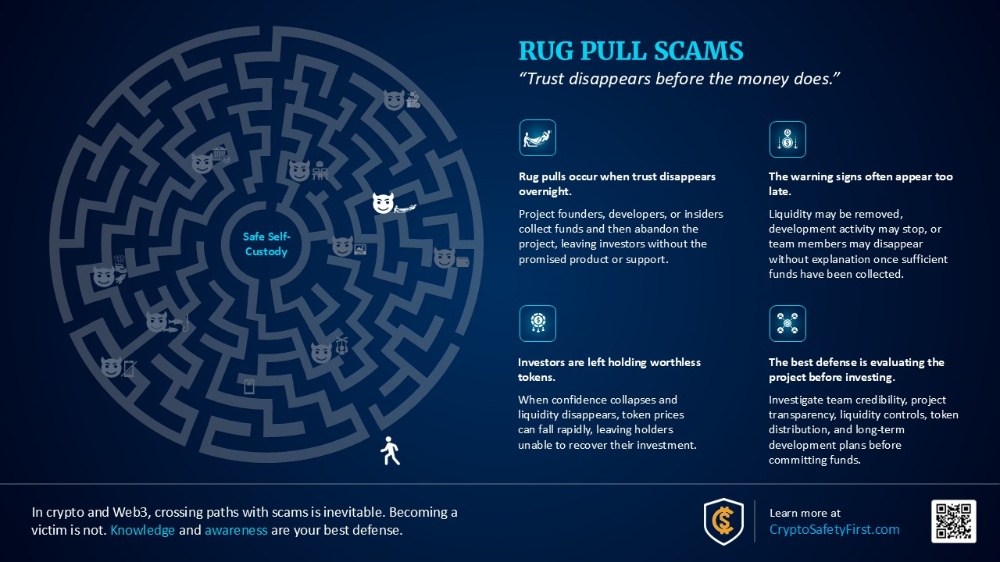
A rug pull is a crypto scam in which a project's creators deliberately abandon the project after extracting value from investors.
The scam may involve removing liquidity from trading pools, dumping large insider token holdings, or using hidden smart contract functions that make it impossible for investors to sell.
Unlike a legitimate startup that simply doesn't succeed, a rug pull is planned from the outset.
Rug pulls are particularly common in:
Why Rug Pulls Work
Most rug pulls don't rely on sophisticated hacking.
Instead, they exploit human psychology.
Scammers create excitement through viral marketing, influencer endorsements, countdowns, exclusive communities, and promises of extraordinary returns. As more people invest, the project appears increasingly legitimate, encouraging even more buyers to join.
The fear of missing out (FOMO) often replaces careful research.
By the time investors begin asking difficult questions, the people behind the project have already achieved their objective.
Common Types of Rug Pulls
Although every scam is different, most rug pulls fall into one of these categories:
Liquidity Rug Pulls
Developers remove liquidity from trading pools, making it difficult or impossible for investors to sell their tokens.
Token Dump Rug Pulls
Project insiders hold a large percentage of the token supply and suddenly sell into growing market demand, causing the price to collapse.
Malicious Smart Contracts
The smart contract contains hidden functions that allow developers to block selling, mint unlimited tokens, blacklist wallets, or manipulate transaction fees.
Slow Rug Pulls
Rather than disappearing overnight, developers gradually abandon the project, reduce communication, drain treasury funds, and quietly extract value over weeks or months.
How to Spot and Avoid a Rug Pull
Before investing in any new token or project, ask yourself:
Do I know who is behind this project?
If the team is anonymous or impossible to verify, proceed with caution.
Have I read more than social media posts?
Look for transparent documentation, realistic goals, and a genuine product—not just hype.
Does the project promise guaranteed or unrealistic returns?
In crypto, promises of easy profits are one of the oldest warning signs.
Have I checked how the tokens are distributed?
If a small group controls a large percentage of the supply, they may be able to manipulate the market.
Has the smart contract been independently audited?
An audit doesn't guarantee safety, but the absence of one should raise questions.
Am I feeling pressured to invest quickly?
Urgency and FOMO are powerful tools scammers use to bypass rational thinking.
Would I still invest if nobody on social media was talking about it?
Make your decision based on research—not popularity.
If several of these questions make you uncomfortable, walking away is often the smartest investment you'll make.
Why a Separate Wallet Reduces the Risk
Buying a newly launched token often requires you to connect your wallet to an unfamiliar website and approve one or more smart contract permissions.
While not every rug pull exploits wallet permissions directly, speculative projects carry a much higher level of uncertainty. Some may contain hidden smart contract functions, others may later become compromised, and some simply disappear after collecting investors' funds.
That's why many experienced crypto users never use their primary wallet for high-risk or speculative projects. Instead, they use a separate wallet funded with only the amount they're prepared to lose.
If the project turns out to be a rug pull—or another type of scam—the potential damage is largely limited to that dedicated wallet, while your long-term holdings remain isolated and protected.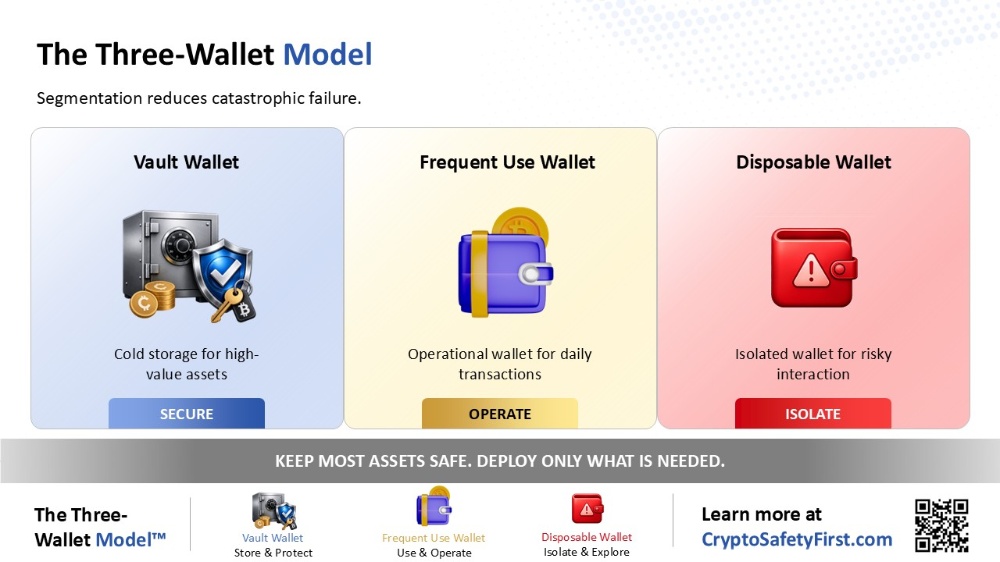
Keep Learning: Rug Pulls Are Just One Type of Crypto Scam
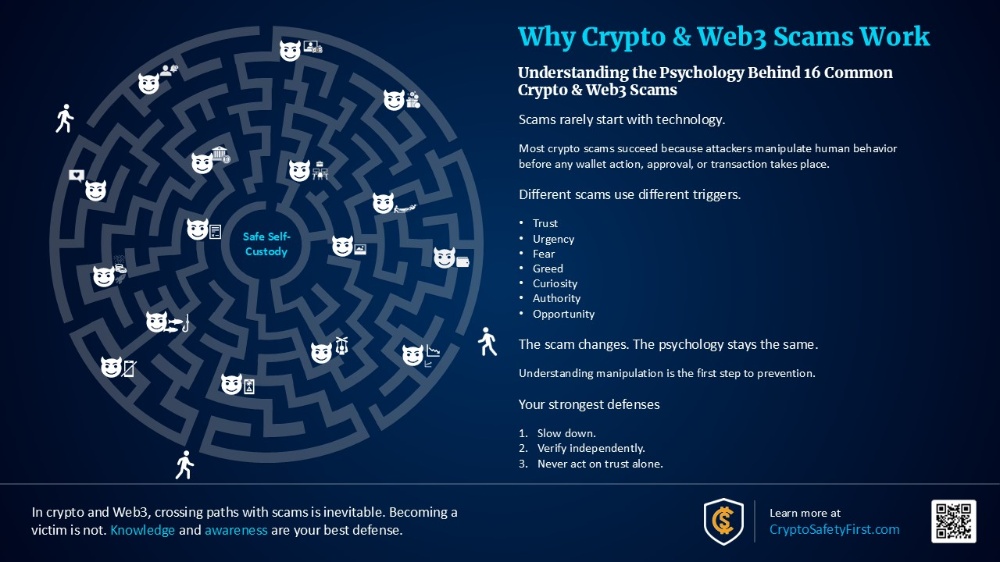
Rug pulls are only one of many scams targeting crypto and Web3 users. Attackers also use phishing websites, fake wallet apps, impersonation scams, malicious smart contracts, fake airdrops, romance scams, job scams, and many other techniques to steal digital assets.
The more scam patterns you recognize, the harder you become to deceive.
If you'd like to learn how to identify 16 of the most common crypto and Web3 scams, along with their warning signs, manipulation tactics, and practical prevention tips, explore The Crypto & Web3 Scams Prevention Guidebook.