The Battle for the Web3 Browser: Why Your Current Browser is Outdated

Think about the apps you use most frequently every single day. You probably think of social media, messaging apps, or email. But in reality, the most important application on your device—the one that acts as your window to the entire digital world—is your web browser.
For the last two decades, the browser market has been completely dominated by a few massive tech corporations. They gave us fast, sleek, and free tools to navigate the internet. But as the old saying goes: if you aren't paying for the product, you are the product. Traditional browsers track your history, build data profiles on your behavior, and auction off your attention to the highest bidding advertisers.
As we transition into the era of Web3, this model is completely breaking down. The next generation of the internet requires a completely different kind of window—a Web3 browser.
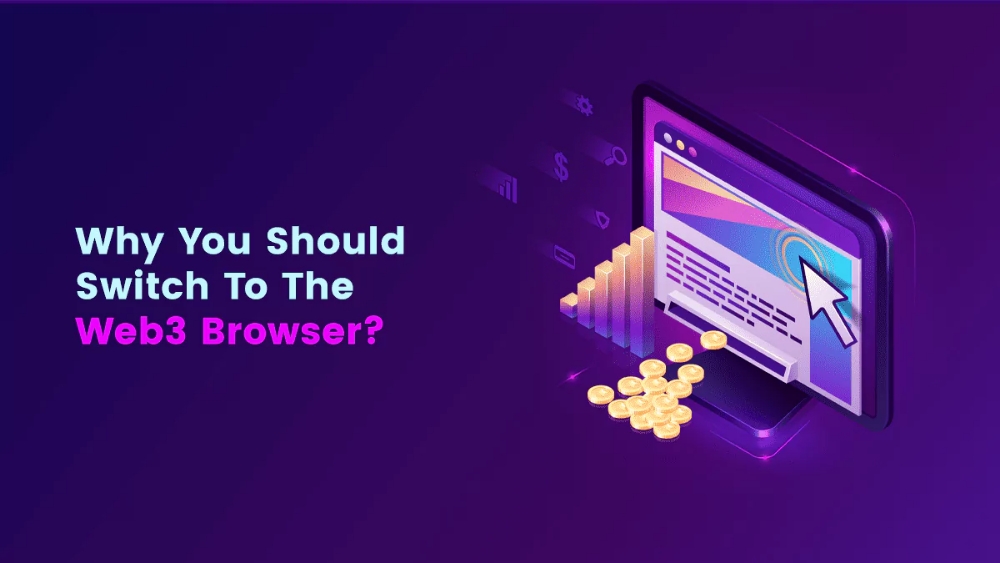
The Problem with the Legacy Window
To understand why you need a Web3 browser, you have to look at how clunky it is to use the modern internet right now. If you want to interact with a decentralized application (dApp), trade a digital asset, or log into a platform using your digital identity, your standard browser can’t do it natively.
Instead, you have to download third-party browser extensions, manage separate wallet plugins, and constantly worry about whether a malicious pop-up is going to drain your account. The standard browser treats the decentralized web like an alien virus it doesn't understand.
Furthermore, legacy browsers treat your attention as a resource to be mined. They track your clicks, store your cookies, and clutter your screen with pop-ups, while giving you absolutely zero upside for the data you generate.
Enter the Web3 Browser
A Web3 browser turns this dynamic completely on its head. It is built from the ground up to treat the blockchain as a native feature of the internet, not a clunky add-on. Here is how it changes your daily internet experience:
- Native Identity and Wallets: Instead of managing five different extensions that slow down your computer, a Web3 browser has crypto wallets and digital identity protocols integrated directly into its core code. Logging into a website becomes as simple as a single click, completely eliminating the need for usernames, corporate trackers, or passwords.
- Privacy by Default: Web3 browsers automatically strip away trackers, scripts, and aggressive advertisements. They don't log your search history on a centralized server to sell to ad networks. Your data stays on your device, completely under your control.
- The Attention Economy: This is where things get truly revolutionary. Some Web3 browsers introduce an entirely new economic model for the internet. If you choose to view privacy-respecting ads, you are rewarded directly with cryptocurrency tokens. You are essentially getting paid for the attention you give to the screen, flipping the traditional advertising model on its head.
The Shift to User Ownership
We are moving away from an internet where we are merely renters of digital space. In the Web2 era, tech monopolies owned the platforms, owned the data, and owned the profits.
Web3 browsers are the front door to an internet where the user is finally in control. They allow you to browse faster because they aren't weighed down by corporate tracking scripts, they protect your digital footprint, and they treat your attention as a valuable asset that belongs to you.
The internet is changing rapidly under the hood. If you are still exploring this new decentralized world using an old, data-mining browser from the early 2010s, it’s like trying to drive a modern electric vehicle with a steam engine. It is time to upgrade the window you use to view the world.