Web3 Security: Why You Have to Be Paranoid in 2026

Honestly? Sometimes I get tired of this constant "crypto-hygiene." I just want to log in, click a button, and get results, rather than inspecting every address under a magnifying glass. But 2026 doesn't forgive laziness. The threat landscape has evolved drastically. Hackers are no longer just script kiddies looking for low-hanging fruit; they are professional syndicates. They analyze your social media, track your transaction patterns, and use high-end psychological profiling to strike when you are most vulnerable. The primary question remains: how do you avoid losing everything in one night just because you were too lazy to check the details?
1. The So-Called "Address Trap"
Have you ever copied an address from your transaction history? I have. And once, I nearly sent a large sum to an "almost identical" wallet. This is known as address poisoning. Scammers monitor the mempool, wait for you to make a legitimate transaction, and then spam your history with an address that matches the first and last four characters of the address you just interacted with.
How I handle it now: Forget about copying from history. History is essentially a minefield. I have started manually curating an "address book" inside my wallet interface for every protocol I use regularly. If I am interacting with a new contract, I use a block explorer to verify the contract address against the official documentation from three independent sources. Furthermore, I always perform a "test transaction"—sending a negligible amount (dust) to confirm the receipt before committing significant capital. It takes 5 seconds, but it saves your assets.

2. When a "Friend" Turns Out to be a Hunter
In 2026, social engineering has reached an inflection point. Scammers aren't just sending "hello" messages; they are engaging in long-term grooming. They join the same communities, participate in the same Farcaster frames, and provide genuinely helpful advice on technical issues for weeks. Once they establish baseline trust, they drop the poison pill: a "private link" to a fix or a new project launch.
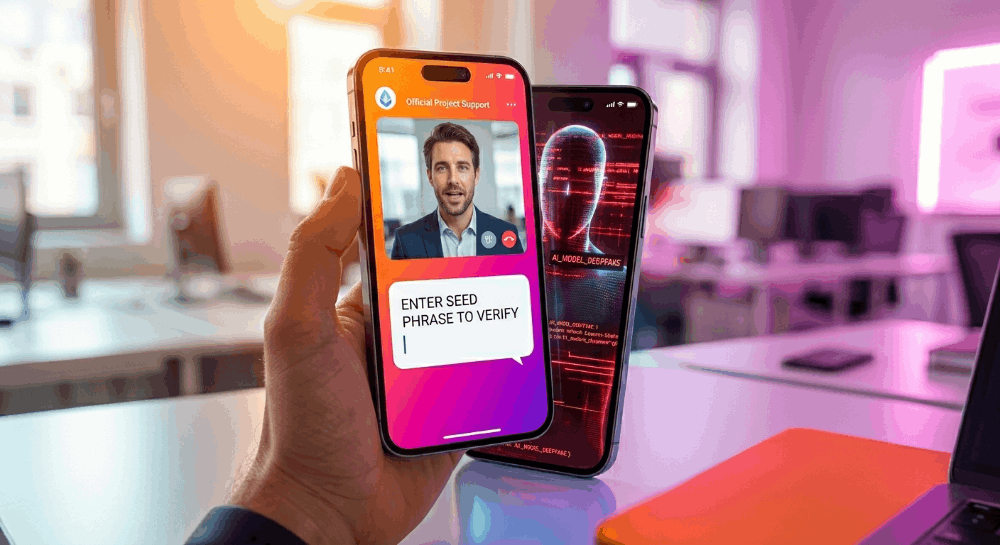
The golden rule: If support DMs you first—it’s a scam. Always. No matter how professional the avatar looks or how much they know about your recent on-chain activity, official support agents do not initiate direct messages. If you have an issue, go to the official Discord and use a ticket system, or open a public thread. Never, under any circumstances, input your seed phrase into a "verification tool" sent by a private contact. A seed phrase is your sovereign key; giving it away is equivalent to handing over the keys to your house and the deed to your property simultaneously.
3. AI as the Scammers’ Primary Vector
We are currently in the era of high-fidelity deception. Deepfake audio and video have advanced to the point where even visual confirmation is no longer proof of identity. I have seen cases where scammers used real-time deepfake audio of a known founder to request "emergency funding" from community members in an voice chat.
My defense strategy: I operate on a "zero-trust" basis. Any request for urgent action—be it an "update your wallet" alert or a "claim your airdrop" notification—is treated as a hostile act until proven otherwise. I perform all my confirmations strictly through hardware wallets that support "blind signing" mitigation. When I interact with a dApp, I insist on full transaction previews. I need to see exactly what "Permit" or "SetApprovalForAll" function is being triggered. If the interface doesn't show me the contract details, I don't sign.
4. The Invisible Hole: Infinite Approvals
This is the most common mistake among veteran DeFi users. We "approve" a protocol to spend our tokens, and that contract gets hacked six months later. Because the approval remains on-chain indefinitely, the attacker can drain your wallet even if you haven't touched that dApp in a year.
How to sleep soundly: Make it a part of your monthly routine to use tools like Revoke.cash or the built-in management tools in Rabby Wallet. Review every active allowance. If you see an "infinite" approval, revoke it immediately. My personal rule: if I’m not actively using a protocol for a trade, it shouldn't have access to my capital.
5. Device Security: Digital Quarantine
By 2026, our devices are essentially high-value targets. If you use the same browser for your personal social media, your banking, and your Web3 trading, you are one malicious cookie away from total loss.
Practical Isolation & Building the Fortress:
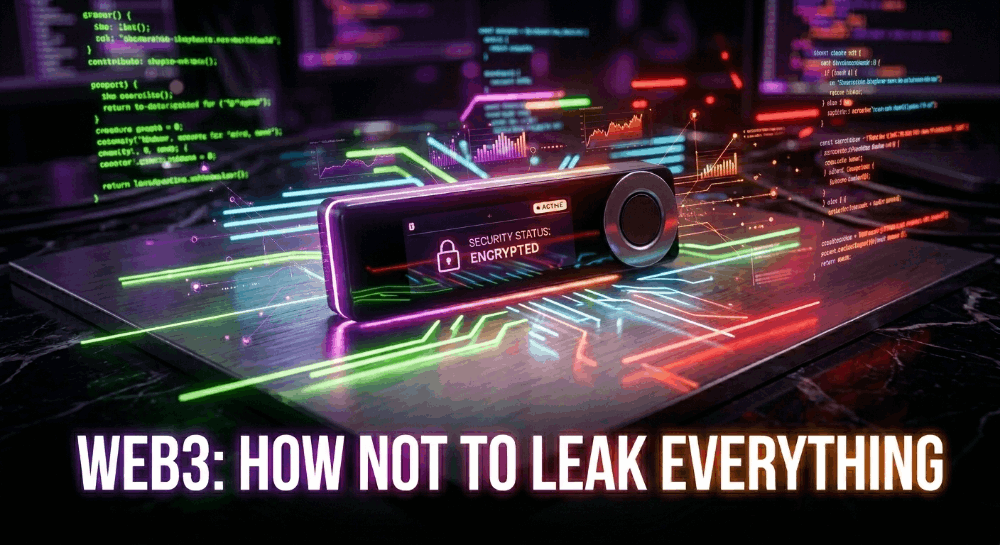
The Trading Browser: I use a dedicated, hardened browser instance solely for Web3. It has no extensions except for the bare minimum (a single hardware wallet extension). No password managers, no ad-blockers that haven't been audited, and absolutely no browsing history outside of verified protocol sites.
Hardware Hygiene: Firmware updates are not optional. If a hardware wallet manufacturer releases a security patch, your device should be updated within the hour. Stale firmware is the primary target for hardware exploits.
Compartmentalization: I keep a clear line between my "disposable" assets (the hot wallet) and my "wealth" (the cold storage).
Offline Sovereignty: My seed phrase has never entered the digital realm.

Conclusion
Security in 2026 is a marathon of vigilance, not a one-time setup. It requires us to discard the idea that "convenience" and "security" can coexist comfortably.
Have you encountered anyone trying to "work" you in the DMs? Or maybe you've already fallen into the "Permit" transaction trap? Share your stories; it will help others avoid stepping on the same rakes. In our community, experience is the primary currency of security. By sharing our near-misses and our successful defenses, we collectively raise the cost for attackers, making the Web3 ecosystem safer for everyone. Stay paranoid, stay educated, and keep your keys offline.
Sovereign Author