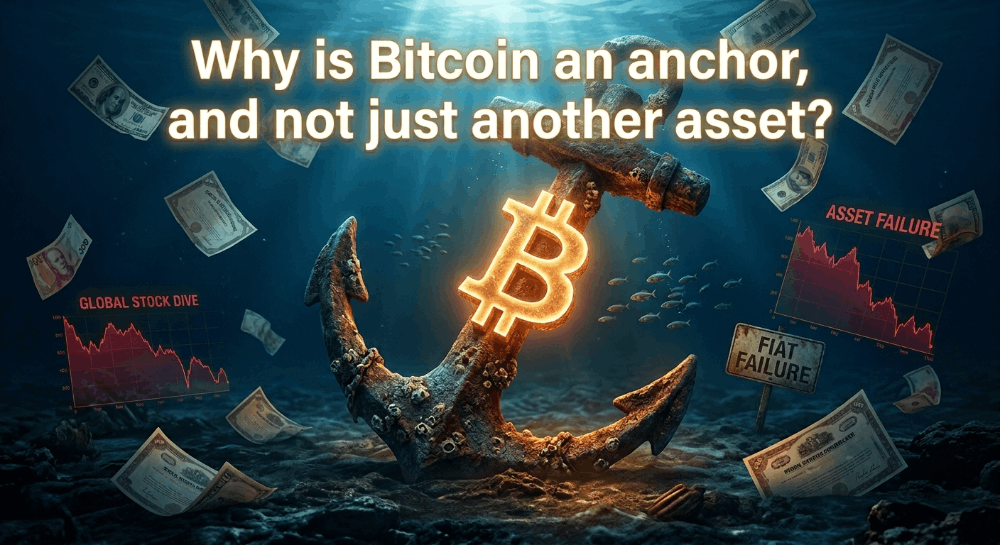
Why is Bitcoin an anchor, and not just another asset?

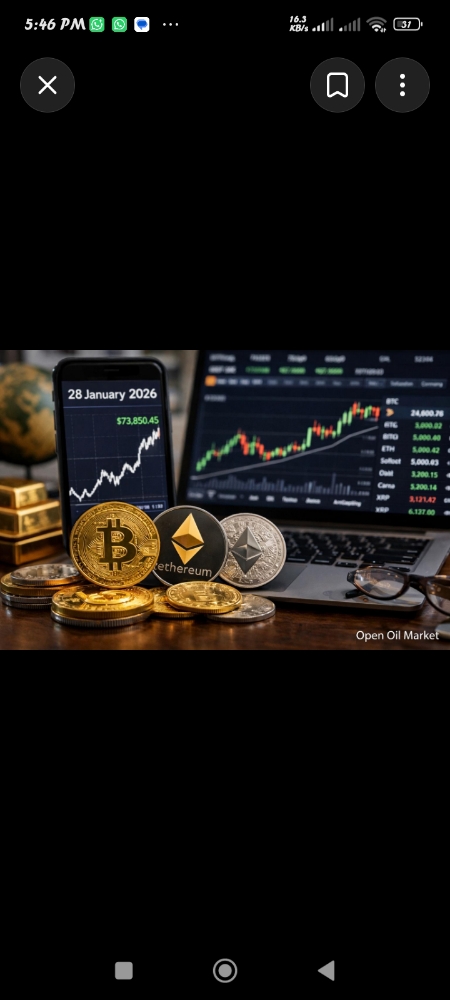
I often hear the question: why bother with Bitcoin if it seems so expensive to transfer? Here, it is important to separate the "foundation" from the "toolkit." Bitcoin is the very asset that, in the long term, holds value better than any platform utility tokens.
But to work with it profitably, I use a two-stage strategy:
Accumulation in low-fee networks: I do not withdraw assets directly through the main Bitcoin network, where fees can bite. I choose fast and cheap networks (like Solana) to transfer what I've earned to my wallet with minimal losses.
Conversion at the finish line: Already inside a personal wallet or through proven exchange tools, I convert what I have accumulated into Bitcoin.
Layer 2 solutions: Using technologies like the Lightning Network allows one to manage Bitcoin almost for free. This is the true level of a sovereign author: knowing how blockchain mechanics work so as not to overpay.

The magic of mathematics: the impact of fees over a distance
Let's delve into the numbers. Imagine you write content that earns you 5 dollars a month in tokens. If you withdraw them monthly, paying 16 cents each time — that is a 3.2% loss. Seems small? But let's look at this on an annual basis and through the prism of capitalization.
If these 5 dollars were converted monthly into an asset that grows in price over the year, your losses on fees are not just a deduction from the balance, they are lost investment profit. Moreover, fees on the blockchain tend to grow along with network congestion. During periods of "hype" in the crypto market, the cost of transactions in popular networks can grow by 5–10 times. An experienced strategist knows: when the market is "boiling" and transactions are expensive — it is the best time for accumulation inside the platform. When the network "cools down" — it is time to withdraw. This is the art of timing, which distinguishes a professional from an amateur.

The psychology of digital sovereignty
Being a "sovereign author" is not only about mathematics. It is a state of mind. When you begin to treat your tokens as capital, rather than as "bonuses for clicks," your approach to content changes. You stop chasing the quantity of publications for the sake of penny rewards and begin to value quality.
Web3 gives us a unique chance: we can be the owners of our intellectual labor. But ownership requires responsibility. If you do not control your keys (not your wallet — not your coins), if you do not count fees, if you do not understand which network your assets lie in — you are not an owner, you are just a guest. And in this guest mode, the system will always try to take a part of your labor for itself. Sovereignty is the right to decide when and how to manage your wealth.
Technical foundation and security
Let's talk about what happens "under the hood." Each transaction that you send passes through the mempool — a kind of waiting queue where transactions wait for confirmation by miners or validators. The size of the fee directly affects the priority of your transaction.
When you withdraw funds, you are effectively participating in an auction for a place in a block. Platforms often average this cost, offering you a fixed fee. Sometimes it is profitable, sometimes — not. A sovereign author always checks if the site offers tools for adjusting transaction speed. And never neglects security: storing assets on exchanges or centralized platforms is a risk. My personal strategy: earned, accumulated to a threshold, withdrew to a non-custodial wallet, converted into a hard asset (Bitcoin), forgot.
Many authors fear the asset exchange process. They think that if they change "their" token for another, they lose something. In reality, liquidity is what turns a token into money. If you hold a token that cannot be exchanged anywhere except on the platform itself — this is not an asset, these are "play money."

Conversion and liquidity: how not to lose during an exchange
Look for exchange methods with minimal price slippage. Decentralized exchanges (DEX) today provide tools for exchanging almost any asset for any other. Study how liquidity pools work. When you understand the mechanics of exchange, you stop fearing volatility — you begin to use it.
Architecture of success: a systematic approach
Today, for me, being a "sovereign author" means not just writing texts. It means building a system where each element works for a result:
Accumulation strategy. I view the internal balance of the platform not as a "place where money lies," but as a buffer that must be filled to a target threshold.
Financial monitoring. Before confirming any operation in the wallet, I always look at the Estimated Fee field. If it seems unreasonable to me, I cancel the transaction and wait. Discipline here is more important than speed.
Content value. Each article is an intellectual asset. If I spend time on analytics, I am obliged to ensure that the received reward does not "burn" in fees.
The market in Web3 does not forgive amateurism. Those who try to snatch a little bit, most often simply lose time on transaction maintenance. But those who build a system — methodically, cool-headedly, and with an understanding of network mathematics — in the end, remain in profit.
Your main currency is not the tokens on your account. It is your ability to manage them by understanding the rules of the game. Do not be a user, be an architect of your finances. The future belongs to those who build it on a foundation of knowledge, and not on the sand of random earnings. Start small: next time before pressing the "Withdraw" button, stop and ask yourself — is it profitable right now? The answer to this question is your first step toward financial freedom in a decentralized world.
If you found this analysis useful, please subscribe to my profile 🚀. I regularly share insights on Web3, decentralized infrastructure, and strategies for digital asset management 📈. Let’s build the future of financial sovereignty together! 💎