Parents and Comparisons: The Hidden Cost of Measuring One Child Against Another

There are words parents sometimes speak with the best intentions, hoping to inspire their children to do better. “Why can’t you be more like your brother?” “Look at your sister; she is already successful at your age.” “Your younger sibling is doing better than you.” These statements may seem harmless, even motivational, but their consequences can extend far beyond the moment they are spoken.
When parents turn siblings into benchmarks for one another, they risk transforming a relationship that should be built on love, companionship, and mutual support into one defined by competition, resentment, and silent emotional wounds.
When Love Begins to Feel Like a Competition
Every child wants to feel accepted for who they are. Children may share the same parents, household, and upbringing, yet possess different temperaments, abilities, interests, and developmental timelines. One may excel academically, another creatively; one may be outspoken, while another is quietly observant.
The problem begins when parents treat these differences as a hierarchy rather than as individual expressions of potential.
A child who repeatedly hears that a sibling is smarter, more responsible, more attractive, or more successful may gradually internalise the belief that they are somehow inadequate. Instead of asking, “What am I good at?” they begin asking, “Why am I not as good as my sibling?”
Research supports the concern. A 2018 study by Jensen, McHale, and Pond found that parents’ comparisons of siblings were associated with differences in parent-child conflict and, under certain conditions, later problem behaviours among adolescents.
What parents intend as motivation may therefore become a source of insecurity.
The Silent Poison in Sibling Relationships
Perhaps one of the most unfortunate consequences of parental comparisons is that they can damage the relationship between the very children parents hope to see supporting one another.
Imagine a child who consistently receives praise while their sibling is criticised for falling short. Over time, the favoured child may become a painful reminder of everything the other child believes they lack. Admiration can turn into envy, affection into rivalry, and shared victories into uncomfortable reminders of personal inadequacy.
Sometimes, the resentment is directed at the sibling rather than at the parent whose comparisons created the tension. The sibling becomes the perceived enemy, even though they may have done nothing wrong.
Research reinforces these concerns. A 2024 meta-analysis by Eradus and colleagues found that differences in parental warmth and hostility were associated with differences in children’s behavioural problems. The associations were particularly pronounced when one sibling experienced more hostility than the other.
The tragedy is that siblings who could have been lifelong allies may instead grow into adults who struggle to celebrate one another, communicate honestly, or maintain emotional closeness.
The Favoured Child Also Pays a Price
It is easy to assume that the child who receives the praise escapes unharmed. However, being consistently positioned as the successful or preferred sibling can create its own burden.
The favoured child may feel pressured to maintain an image of perfection, fearing that a mistake, failure, or disappointing decision will cost them their privileged position. They may also experience guilt about their sibling’s struggles or learn to measure their worth through superiority rather than genuine self-confidence.
Consequently, both children can become prisoners of the same comparison: one struggles to prove they are good enough, while the other struggles to remain good enough.
Neither learns the freedom of being valued without having to defeat someone else.
How Comparisons Can Change the Trajectory of a Life
The effects of childhood comparisons do not necessarily disappear when children leave home. They can influence the decisions people make, the relationships they pursue, and the risks they are willing to take.
A child repeatedly labelled less intelligent may avoid opportunities that require confidence, even when they possess the ability to succeed. Another, praised exclusively for academic excellence, may choose a career to preserve parental approval rather than pursue a genuine passion.
Some become chronic people-pleasers, desperately seeking validation. Others develop resentment, withdraw emotionally, or become excessively competitive. Some may carry an enduring sense of inadequacy into friendships, romantic relationships, and their own parenting.
A 2025 systematic review and network meta-analysis by Jiang, Yang, and Chen examined 26 studies involving 37,025 participants. It found associations between differences in parental treatment and several difficulties, including depression, anxiety, aggression, and rule-breaking behaviour. The findings also highlighted the role of sibling relationships in these associations.
These findings do not mean that every compared child will experience lasting harm. Rather, they demonstrate why parents should take repeated comparisons seriously.
A sentence spoken in frustration may be forgotten by the parent within minutes but remembered by a child for years. Repeated often enough, such messages can become part of the story a child tells themselves about who they are and what they deserve.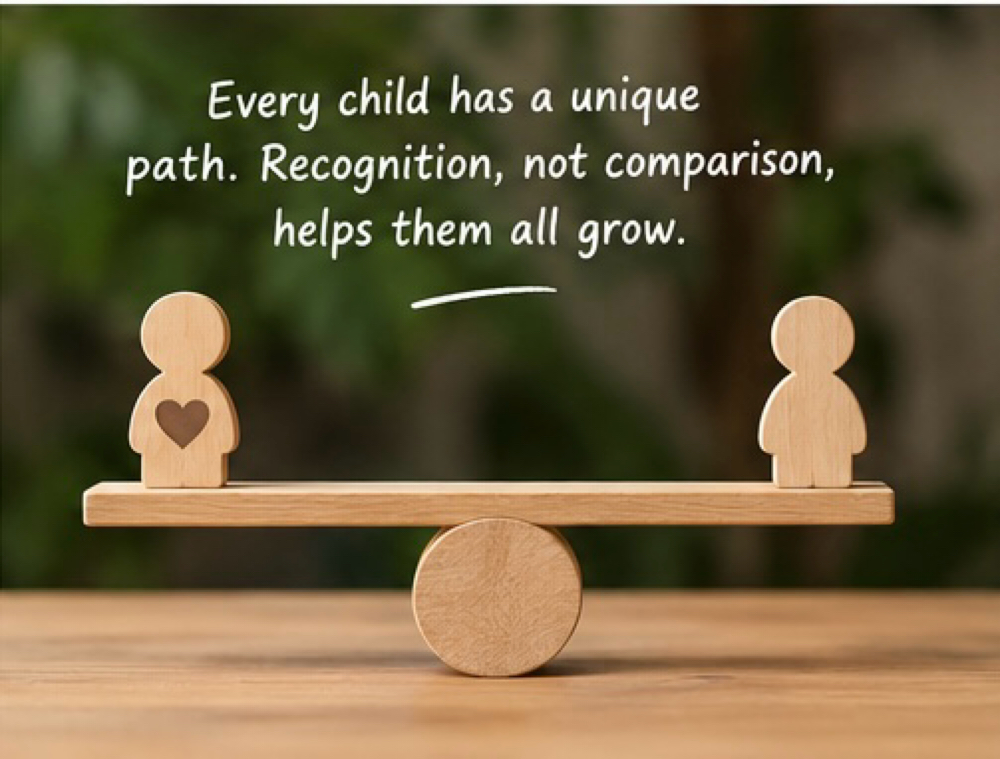
Parents do not have to pretend their children are equally talented in every area. Nor does fairness require treating children identically regardless of their needs. Children may require different levels of attention, discipline, and support at different stages of development.
The distinction lies between recognising differences and assigning worth based on those differences.
Instead of saying, “Why can’t you be like your sister?” a parent can ask, “What is making this difficult for you, and how can I help?” Instead of praising one child at another’s expense, parents can recognise each child’s progress, effort, character, and individual strengths.
Most importantly, parents must resist the temptation to use one child as a tool for correcting another.
Children should be encouraged to learn from one another, not made to feel that another person’s success diminishes their own.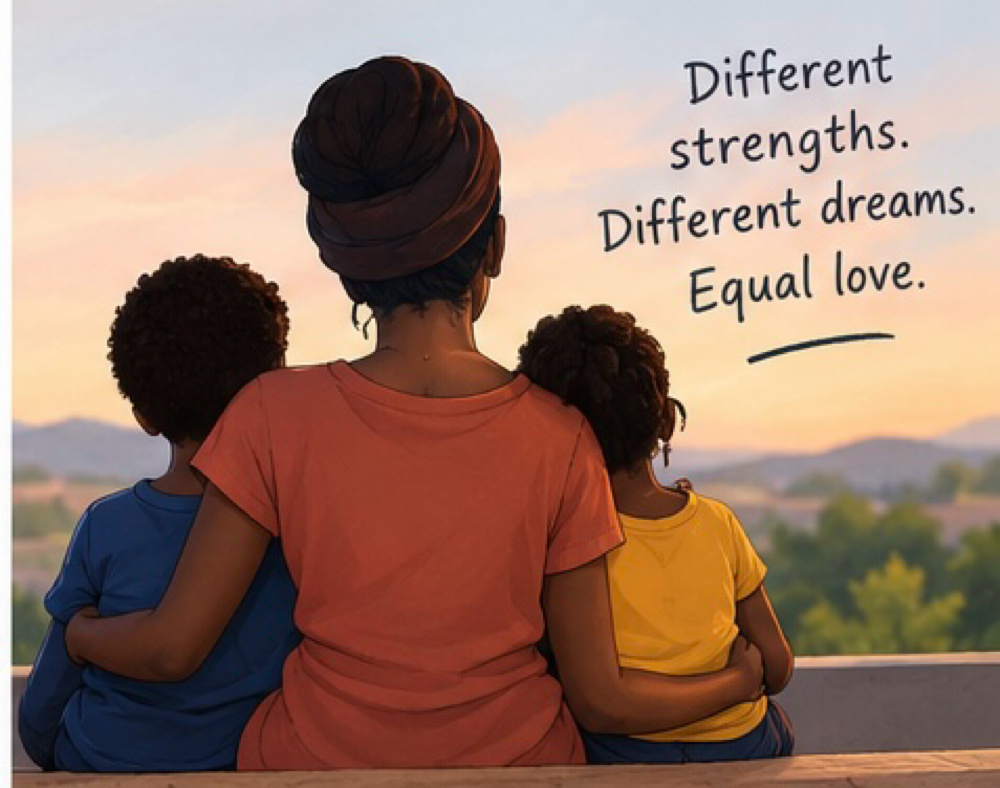
One day, the children who once competed for their parents’ approval will become adults. Their parents may no longer be present to compare their achievements, but the emotional patterns established in childhood may continue to influence how they relate to one another.
Parents must therefore ask themselves an uncomfortable but necessary question: Am I raising siblings who will support one another when I am gone, or am I unknowingly teaching them to see one another as rivals?
The goal of parenting is not to produce one child who outshines the rest. It is to nurture individuals who understand their worth, respect one another’s differences, and can celebrate each other’s victories without feeling diminished.
When parents stop comparing their children and start understanding them, they give each child something far more valuable than the temporary motivation of competition: the confidence to become themselves and the freedom to love their siblings without resentment.
Because ultimately, a child’s success should never have to come at the expense of their sibling’s self-worth, and no child should have to become someone else to feel worthy of their parents’ love.
References
1. Jensen, A. C., McHale, S. M., & Pond, A. M. (2018). Parents’ social comparisons of siblings and youth problem behavior: A moderated mediation model. Journal of Youth and Adolescence, 47, 2088–2099.
2. Eradus, M., Leijten, P., Melendez-Torres, G. J., Foo, X. Q., & Oliver, B. R. (2024). Parental differential warmth, hostility, and sibling differences in internalizing and externalizing behavior problems: A meta-analysis. Journal of Family Psychology, 38(3), 387–399.
3. Jiang, Z., Yang, Y., & Chen, B.-B. (2025). Parental differential treatment of siblings and child psychopathology: A network meta-analysis. Clinical Child and Family Psychology Review, 28(3), 555–572.
4. Jensen, A. C., et al. (2023). Sibling differences and parents’ differential treatment of siblings: A multilevel meta-analysis. Developmental Psychology, 59(4), 644–654.
5. Liu, C., & Abdul Rahman, M. N. (2022). Relationships between parenting style and sibling conflicts: A meta-analysis. Frontiers in Psychology, 13, 936253.